Denim Throw Pillow Covers: Old Jeans You’ll Want to Display
If you’ve ever held onto a pair of old jeans just in case, this project is calling your name. Denim throw pillow covers are one of those magical DIYs that feel cozy, intentional, and surprisingly elevated all while being incredibly practical.
They’re the kind of handmade decor that instantly warms up a space. Toss one on a sofa, layer a few on a bed, or add them to a covered patio for relaxed, lived-in charm. The texture of denim alone does most of the design work for you.
Best of all? This is a beginner-friendly sewing project that uses simple tools and forgiving fabric. Denim is sturdy, confidence-boosting, and perfect for practicing straight seams without stress.
Whether you’re crafting for your own home, creating thoughtful handmade gifts, or building inventory to sell, denim throw pillow covers are calm to make, affordable, and endlessly customizable.
This website contains affiliate links. As an Amazon Associate, I earn from qualifying purchases. Please read our disclaimer.
Project Overview: Denim Throw Pillow Covers
These pillow covers are sculptural in a subtle way structured yet soft, with visible seams, tonal variation, and authentic texture. Patchwork fronts highlight light, medium, and dark washes, while intact jean pockets add a modern, utilitarian detail that feels intentional rather than “crafty.”
Styled in a neutral home, they read as rustic-modern decor: relaxed, durable, and effortlessly styled. Each piece feels one-of-a-kind, yet cohesive enough to work beautifully in sets.
Materials & Tools

Materials
- 2–3 pairs of old jeans (different washes for contrast)
- Pillow insert (any size you love: 16×16, 18×18, or lumbar)
- Zipper, buttons, or Velcro for closure
- Strong thread (polyester or denim-weight)
Tools
- Fabric scissors
- Measuring tape or ruler
- Sewing machine (affiliate) or hand-sewing needle
- Pins or sewing clips
- Iron (optional but helpful)
Step-by-Step Tutorial: Denim Throw Pillow Covers

Step 1: Measure Your Pillow Insert
Measure the width and height of your pillow insert.
Add 1 inch to each side to allow for seam allowances.
Technique note: Denim doesn’t stretch much, so accurate measuring makes the finished cover look crisp and professional.
Step 2: Cut Your Denim Pieces
Cut denim panels from your jeans. You can:
- Use two large panels (front and back) for a clean, beginner-friendly look
- Cut squares or rectangles for a patchwork front
Mix light, medium, and dark washes for visual depth. Keep pockets intact if you want functional detail.
Step 3: Arrange Your Design
Lay all pieces flat on a table and play with the layout before sewing.
Balance darker pieces with lighter ones, and place pockets where they feel intentional not crowded.
Beginner tip: Take a quick photo once you like the arrangement so you can recreate it easily at the machine.
Step 4: Sew the Panels Together
If using patchwork, sew the smaller pieces together first to create one complete front panel.
Then place front and back right sides facing, pin, and sew around three edges, leaving one side open.
Technique note: Use a slightly longer stitch length denim likes breathing room.
Step 5: Add the Closure
Choose the closure style that feels best for you:
- Zipper: Most polished, great for selling
- Buttons: Rustic and charming
- Envelope fold: Fast, beginner-friendly, no hardware
Secure the opening fully so the insert sits snug.
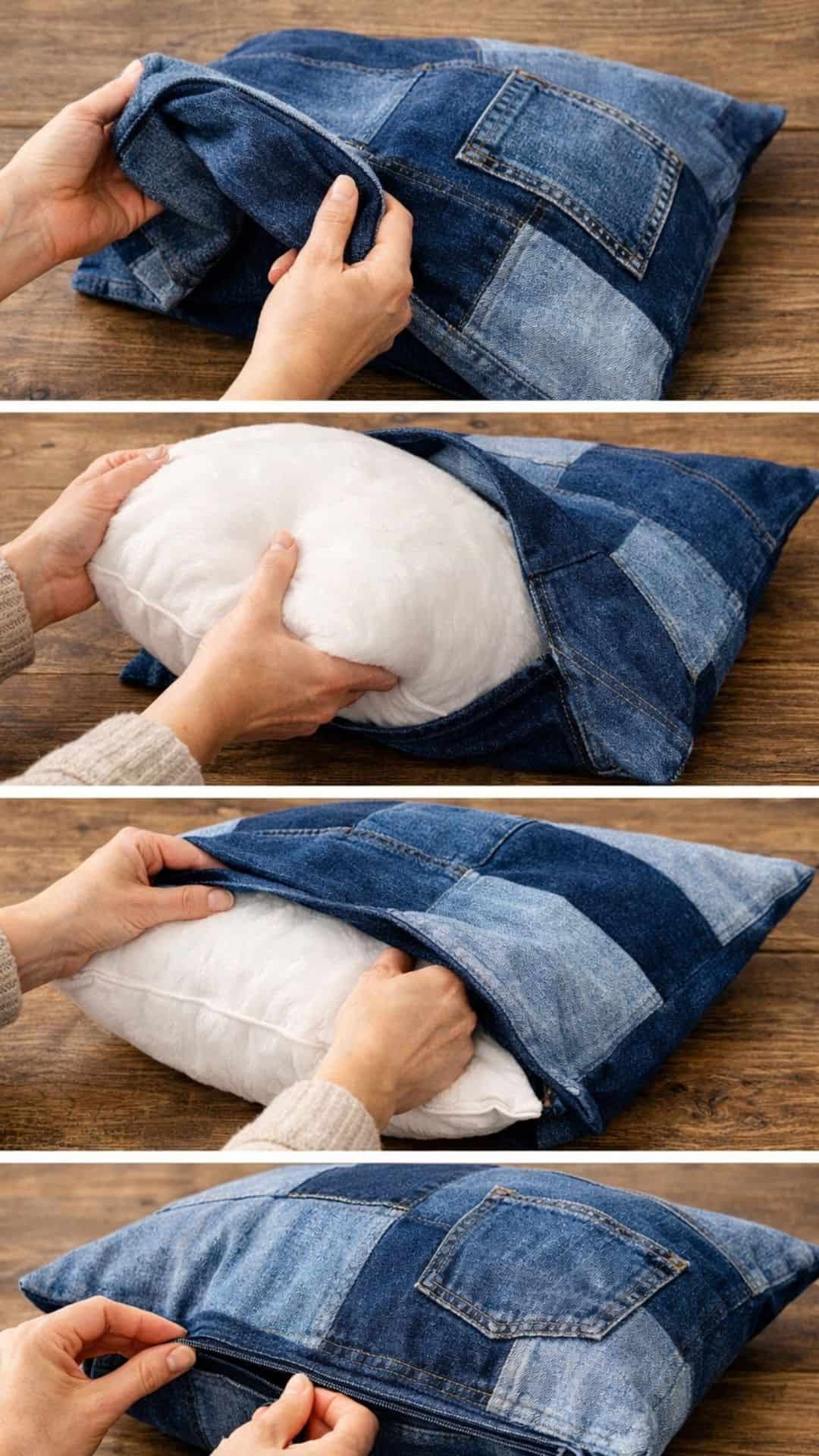
Step 6: Insert Pillow & Finish
Turn the cover right-side out, gently push out corners, and insert your pillow.
Close the opening and give it a light press if desired.
Finished Piece Styling
These denim throw pillow covers look best layered. Mix them with:
- Linen or canvas pillows
- Neutral throws
- Leather, wood, or black metal accents
They’re display-worthy, gift-ready, and sturdy enough for everyday use perfect for couches, beds, benches, or outdoor seating.

Why This Craft Sells So Well
- Upcycled denim appeals to eco-conscious shoppers
- Each pillow is one-of-a-kind
- Neutral but textured easy to style
- Feels durable and practical, not fragile
- Strong perceived value due to fabric weight and detail
Suggested Price Point
Standard Size / Core Version
$35–55 per cover
This range works well for:
- Standard 16×16 or 18×18 covers
- Simple patchwork or single-panel designs
- Envelope or button closures
Most makers land comfortably here for markets and online shops.
Premium / Elevated Versions
$65–95+ per cover
Charge more for:
- Large or lumbar sizes
- Intricate patchwork layouts
- Hand-selected washes or pocket placement
- Zippers and interior finishing
- Limited edition or custom color palettes
These read more like sculptural decor than basic pillows.
Set Pricing (Highly Recommended)
Set of 2: $70–100
Set of 3: $105–150
Sets:
- Look intentional on sofas or beds
- Increase perceived value
- Raise average order value with ease
Wholesale Guidance (Optional)
Wholesale pricing typically lands at 50–60% of retail.
Example: A $50 pillow → $25–30 wholesale.
Pricing Confidence Tip
You’re not selling “old jeans.”
You’re selling handmade, sculptural, functional decor with modern styling. If your finish and photos are strong, don’t underprice.
Batching Tip
Cut all denim panels at once, then sew multiple fronts assembly-line style. Denim loves consistency, and batching dramatically reduces setup and cleanup time.
Packaging Idea
Fold each cover neatly, tie with natural twine, and add a kraft paper tag.
For markets, stack them in shallow wooden crates (affiliate) or wire trays for Pinterest-worthy presentation.
Fun Variations to Offer
- Solid-wash minimalist versions
- Extra-large floor pillow covers
- Seasonal indigo + white combos
- Contrast stitching in cream or tan
- Pocket styles designed for remotes or books
Pro Tip
Add a lightweight fusible interfacing to the back of patchwork fronts it stabilizes seams, improves durability, and gives a more professional finish.
Check out my extensive list of sewing projects from recycled denims and denim jeans.
Wrapping Up
Denim throw pillow covers are the perfect blend of relaxed and refined. They’re approachable for beginners, endlessly customizable, and satisfying to finish exactly the kind of project that builds creative confidence.
Whether you’re crafting for your home or your shop, this is one of those timeless DIYs that always feels right. Trust the process, enjoy the texture, and let your denim tell its story.