Denim Table Runner DIY (Rustic, Modern & Surprisingly Elegant)
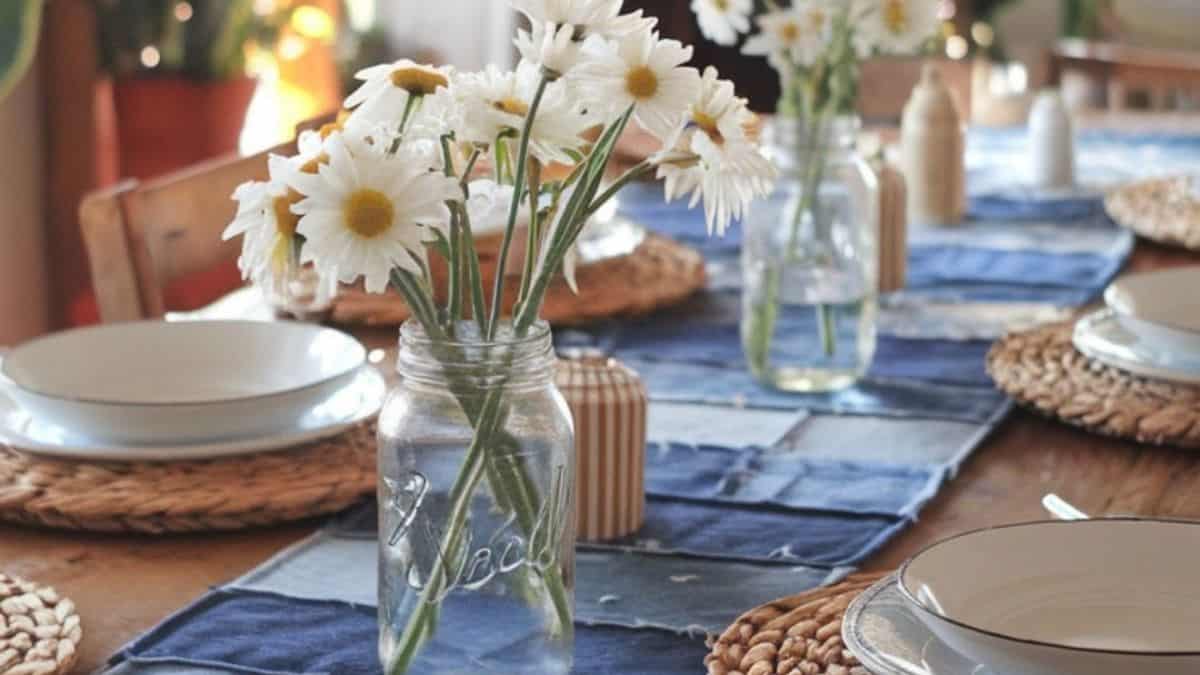
If you love decor that feels lived-in yet intentional, a denim table runner might just be your next favorite project. It’s relaxed, textural, and brings that effortless “styled but not stiff” feeling to your dining table especially when paired with crisp white plates and a simple bouquet of fresh flowers.
This is one of those DIYs that feels good to make. It’s beginner-friendly, uses materials you probably already have, and builds confidence fast. Whether you’re refreshing your own space, making a thoughtful handmade gift, or creating something unique to sell at markets or online, a denim table runner checks all the boxes.
Best of all? Denim is endlessly forgiving. A little wonkiness adds charm, and every finished piece feels one-of-a-kind exactly what handmade decor should be.
This website contains affiliate links. As an Amazon Associate, I earn from qualifying purchases. Please read our disclaimer.
Project Overview: Denim Table Runner
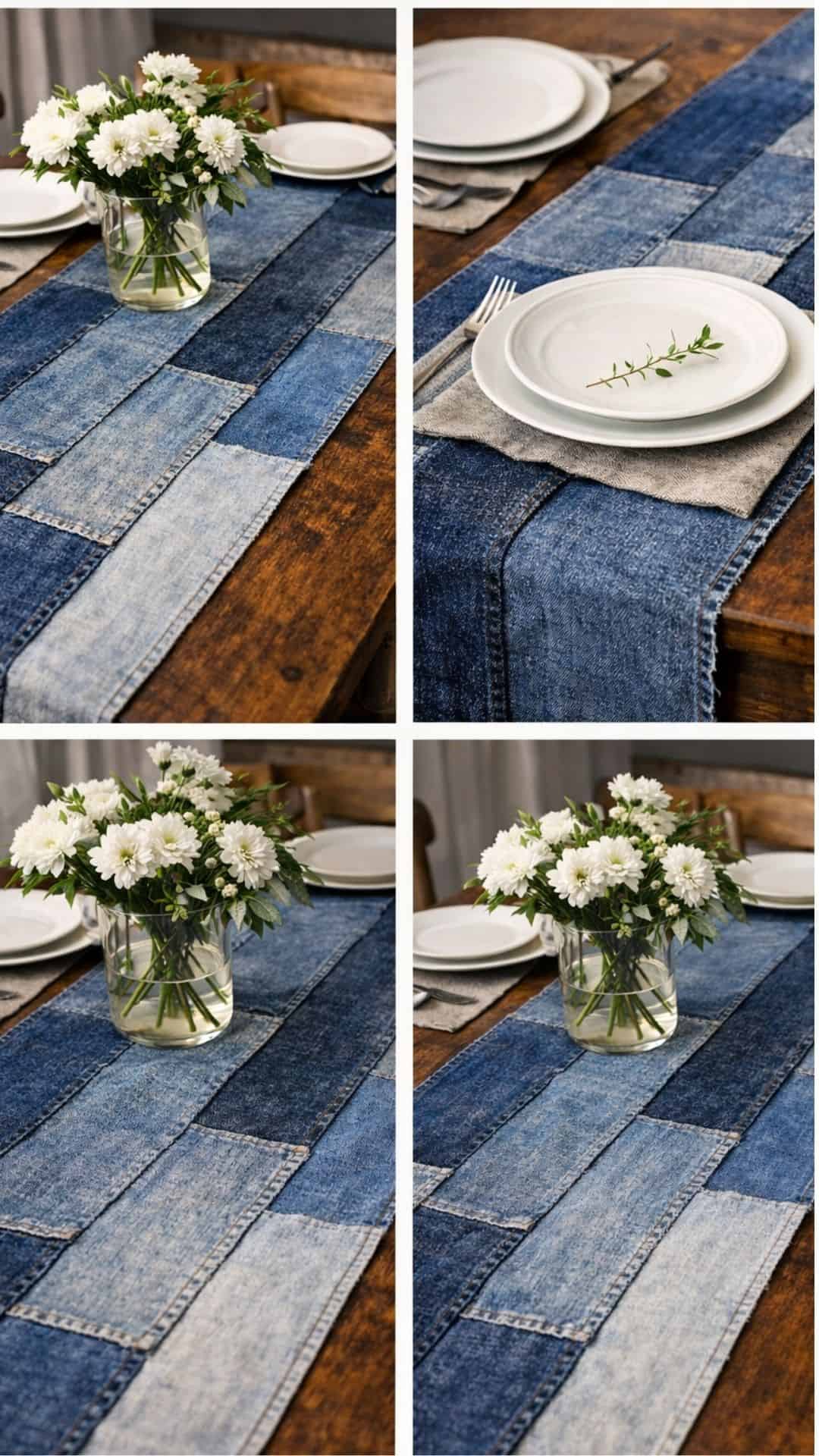
A finished denim table runner has a beautiful sculptural weight to it. The seams create subtle lines and texture, while mixed washes add visual depth without feeling busy. Draped over a wood table, it feels rustic and grounded; styled on a white or stone surface, it reads modern and elevated.
This isn’t overly “crafty” decor it’s functional, minimal, and quietly statement-making.
Materials & Tools
Materials
- Old jeans (2–4 pairs, different washes for contrast)
- Strong thread (neutral or denim blue)
- Optional: lightweight fusible interfacing for extra structure
Tools
- Fabric scissors
- Sewing machine (affiliate) or hand-sewing needle
- Measuring tape
- Pins or sewing clips (affiliate)
- Iron (highly recommended)
Step-by-Step Tutorial: Denim Table Runner
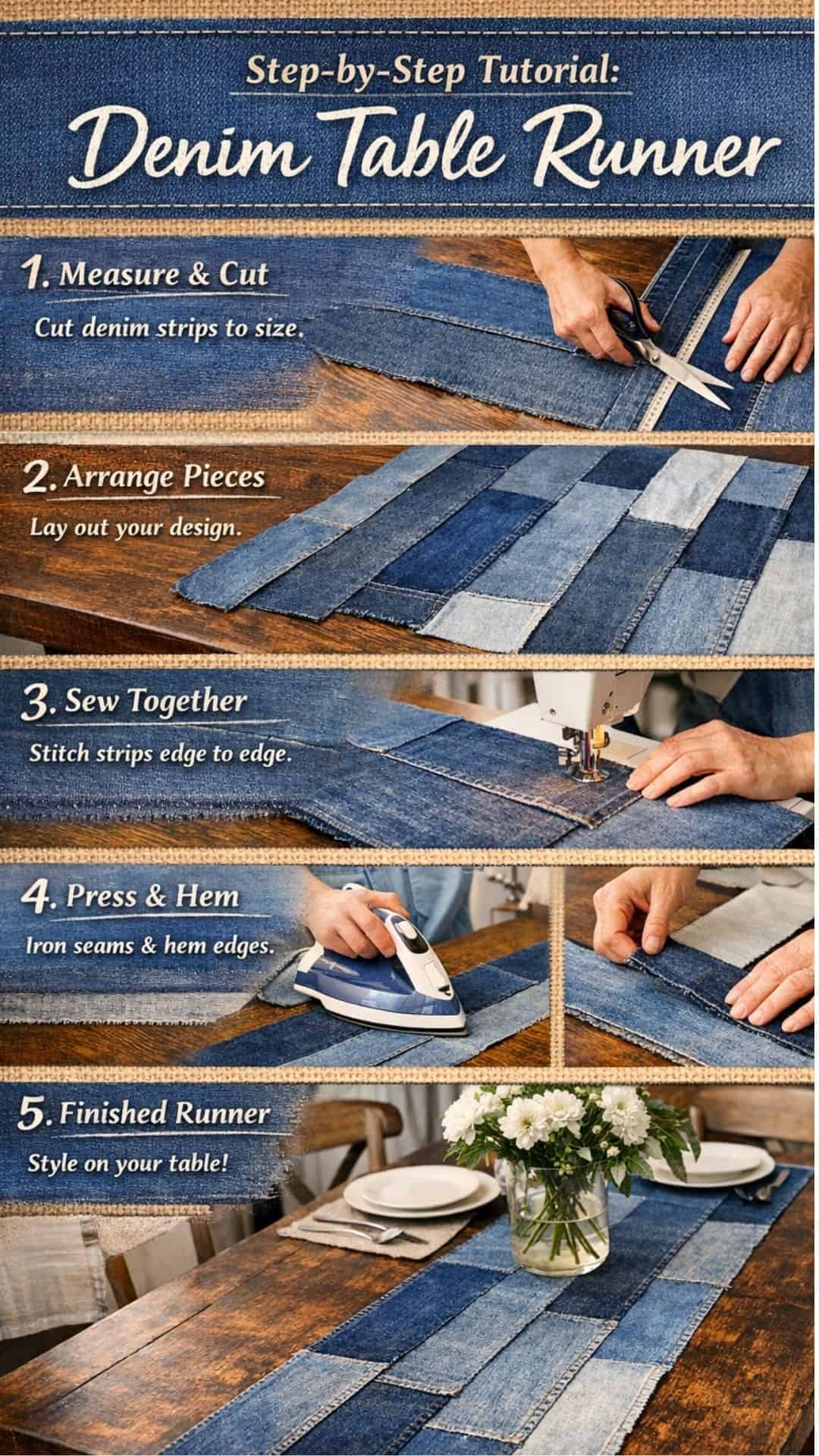
Step 1: Decide on Length & Width
Measure your dining table and add about 12 inches to the total length for a graceful overhang on both ends.
A standard runner width is 14–18 inches, depending on how bold you want it to feel.
Technique note: Wider runners feel more modern and grounded, especially on large tables.
Step 2: Cut the Denim Pieces
Cut your denim into strips or rectangles.
- Patchwork look: Mix different washes and seam them together
- Clean look: Use long panels from similar-colored jeans
Remove bulky seams and pockets to keep everything lying flat.
Step 3: Arrange the Pieces
Lay the strips out on a flat surface until you reach your desired length and width. Play with contrast dark next to light, soft fades beside crisp indigo.
Optional variation: Rotate some pieces horizontally for a subtle, modern patchwork effect.
Step 4: Sew the Strips Together
With right sides facing, sew strips edge-to-edge using a straight stitch. Press seams flat with an iron as you go this makes a huge difference in the finished look.
Confidence tip: Slight variations in seam width add character. Denim hides imperfections beautifully.
Step 5: Hem the Edges
Fold each edge under ½ inch, then fold again for a clean double hem. Stitch all the way around to prevent fraying and give the runner a polished finish.
Finished Piece Styling
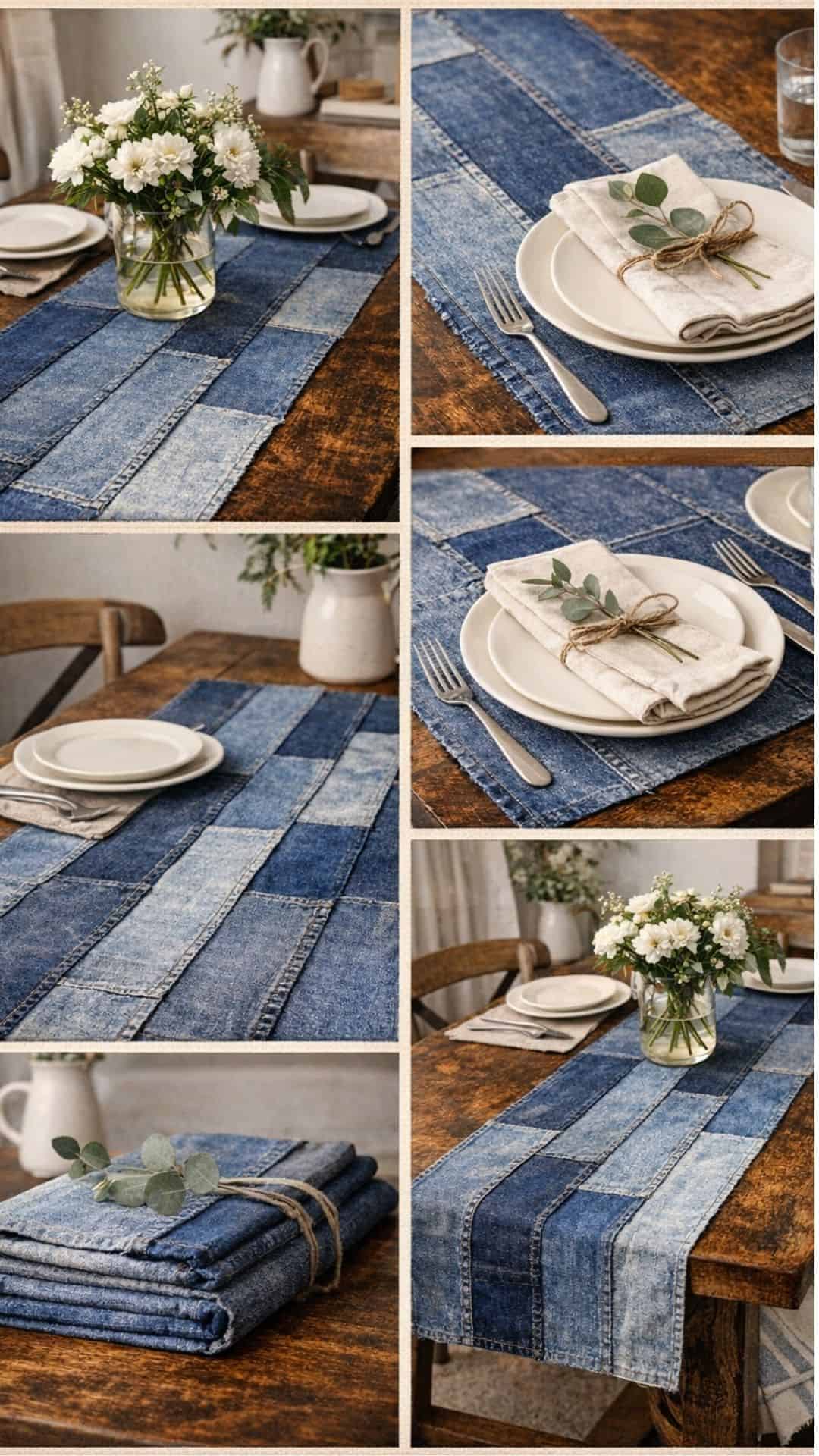
Style your denim table runner down the center of the table with:
- White or stoneware plates
- Linen napkins
- Simple greenery or fresh flowers
It instantly feels display-worthy, gift-ready, and completely market-appropriate. Check out my extensive list of sewing projects from recycled denims and denim jeans.
Pro Tip: Top-stitch seams with slightly thicker thread for durability and a subtle designer finish it elevates the entire piece.
Why This Craft Sells So Well
- Upcycled denim appeals to eco-conscious shoppers
- Every piece is one-of-a-kind
- Works with farmhouse, modern, and rustic decor
- High perceived value due to fabric weight and texture
- Easy to style for social media and Pinterest
Suggested Price Point
Standard Size / Core Version
$35–55
This range works well for runners made from reclaimed denim with clean seams and simple hems. Most makers land comfortably here for market and online sales.
Premium / Elevated Versions
$65–90
Charge more for:
- Extra-wide or extra-long runners
- Carefully curated wash gradients
- Decorative top-stitching or visible seam detailing
- Heavier weight or interfaced backing
These read more like intentional home decor than a simple textile.
Set Pricing (Highly Recommended)
- Set of 2 runners: $90–120
- Coordinated runner + placemats: $110–150
Sets look styled, increase perceived value, and raise average order totals.
Pricing Confidence Tip
Customers aren’t just buying denim they’re paying for design, craftsmanship, and a modern handmade look. If your finish and photos are strong, don’t underprice.
Batching Tip
Cut all denim pieces for multiple runners at once, then sew assembly-line style. Press seams in batches to save serious time.
Packaging Idea
Roll the runner neatly, tie with twine, and add a kraft paper tag. For markets, stack them in shallow wooden trays it looks beautiful and tactile on display.
Fun Variations to Offer
- All-light or all-dark denim
- Raw edge hems for a rustic look
- Extra-narrow runners for coffee tables
- Seasonal versions with contrast stitching
- Matching placemats or napkins
Wrapping Up
A denim table runner is proof that everyday materials can become something truly special. It’s relaxed, stylish, and approachable even if you’re new to sewing.
Trust the process, enjoy the texture, and let the imperfections shine. Handmade decor like this brings warmth to every meal and confidence to every maker.