How to Make Charcoal Melt and Pour Soap: Beginner’s Guide
Charcoal melt and pour soap recipes are a beautiful blend of natural skincare, simplicity, and modern elegance. With their deep inky tones and detoxifying benefits, charcoal soaps feel instantly luxurious yet they’re surprisingly easy to make, even for beginners.
These recipes are perfect if you love crafting soaps that look high-end without complicated techniques. Whether you’re making soap for everyday use, thoughtful handmade gifts, or small-batch selling, charcoal melt and pour soaps offer endless room for creativity. From soft spa-inspired bars to bold, modern designs, they’re as satisfying to create as they are to use.
This website contains affiliate links. As an Amazon Associate, I earn from qualifying purchases. Please read our disclaimer.
Why Charcoal Is Popular in Natural Skincare
Activated charcoal has become a favorite ingredient in natural skincare and for good reason. Known for its ability to draw out impurities, charcoal acts like a magnet for dirt, excess oil, and buildup on the skin. This makes it especially loved for facial soaps, body bars, and cleansing routines that focus on fresh, balanced skin.
Charcoal is also valued for being gentle yet effective. It provides light exfoliation without harsh scrubbing, making it suitable for daily use and for a wide range of skin types. Its naturally dark color gives handmade soaps that modern, spa-quality look that feels both grounding and luxurious perfect for minimalist and earthy skincare styles.
Best of all, charcoal pairs beautifully with essential oils like tea tree, eucalyptus, lavender, and peppermint, allowing you to customize each bar for different moods, skin needs, or seasons.
These charcoal melt and pour soap recipes are designed to be easy and beginner-friendly, using simple techniques and minimal equipment. They’re ideal if you’re new to soap making, creating thoughtful handmade gifts, or producing small batches to sell at markets or online. With melt and pour soap, you get beautiful, professional-looking results without complicated processes just melt, customize, pour, and enjoy.
Supplies You’ll Need for Charcoal Melt and Pour Soap
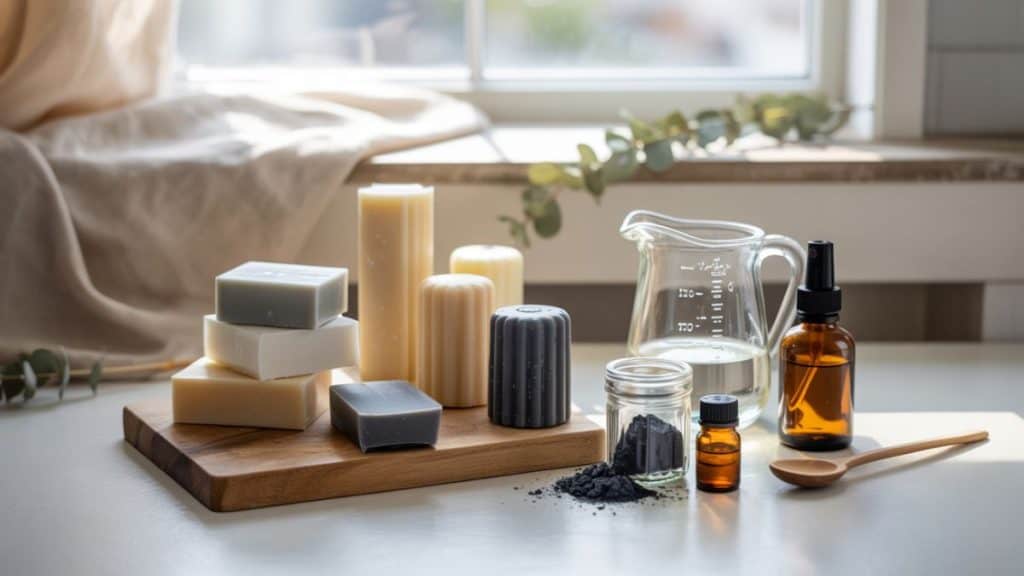
One of the best things about making charcoal melt and pour soap is how simple and accessible the supply list is. You don’t need specialized equipment or a long list of hard-to-find ingredients just a few quality basics to create beautiful, professional-looking soaps at home.
Soap Bases
Clear melt and pour soap base (affiliate): Clear bases are ideal if you love a modern, slightly translucent look. When combined with charcoal, they create smoky, dramatic bars that look especially striking in layered or swirled designs.
White melt and pour soap base: White bases produce a bold contrast with charcoal, resulting in rich grey-to-black tones. This base is perfect for crisp, clean-looking soaps and makes added textures and designs really stand out.
Goat milk melt and pour soap base: Goat milk soap bases add a creamy, nourishing feel and are especially popular for gentle body bars. When paired with charcoal, they create a softer, spa-style aesthetic that feels soothing and luxurious.
Add-Ins and Ingredients
Activated charcoal powder (cosmetic grade): This is the star ingredient. Be sure to use cosmetic-grade activated charcoal, which is finely milled and safe for skin use. A little goes a long way for both detox benefits and color.
Essential oils: Essential oils add fragrance and function. Popular choices for charcoal soap include tea tree for clarity, eucalyptus for a spa-like feel, lavender for calm, peppermint for energy, and lemon for a fresh, clean scent.
Carrier oils (optional): A small amount of jojoba, almond, or grapeseed oil can be added to boost moisture and create a slightly more conditioning bar. These oils are lightweight and won’t interfere with the soap setting.
Botanicals (optional): Dried herbs, flowers, or subtle plant elements can be used sparingly as toppings or decorative accents. They add visual interest and make handmade soaps feel extra special especially for gifting.
Tools
Microwave-safe container or double boiler (affiliate): You’ll need a safe way to melt your soap base gently. A microwave works well for small batches, while a double boiler offers more control for larger projects.
Silicone soap molds (affiliate): Flexible silicone molds make unmolding easy and allow for endless shape options, from classic rectangles to modern geometric designs.
Rubbing alcohol in a spray bottle: A quick spritz of rubbing alcohol removes surface bubbles and helps layers adhere smoothly, giving your soaps a clean, polished finish.
Soap cutter (optional): If you’re using loaf molds, a soap cutter helps create neat, even bars but a sharp knife works just fine for beginners.
Tips for Working With Activated Charcoal
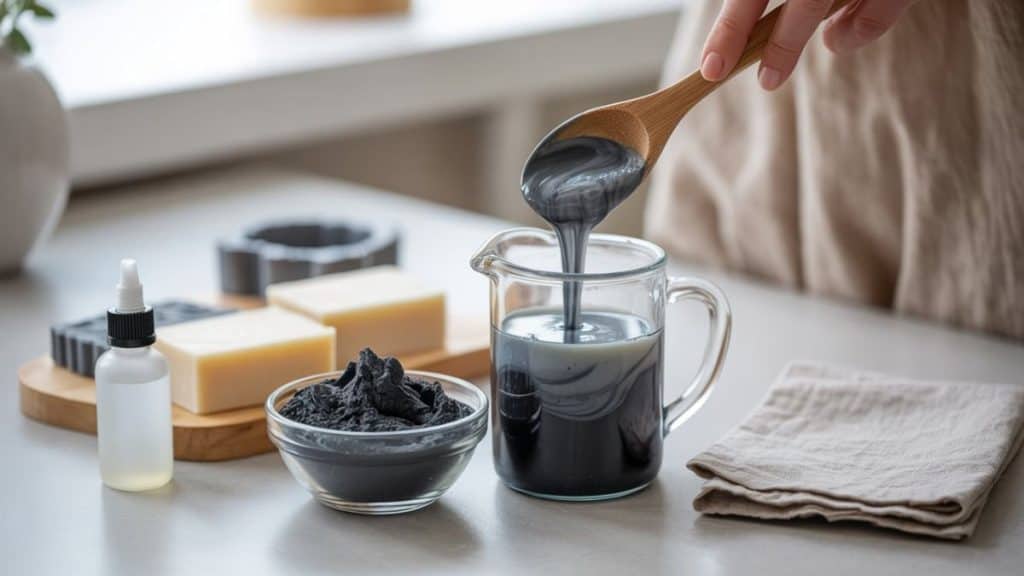
Activated charcoal is easy to use, but a few simple tips will help you get smooth, professional-looking soap bars every time. These small details make a big difference especially if you plan to gift or sell your soaps.
Use a Light Hand
Activated charcoal is very concentrated, so a little goes a long way. Using too much can make soap bars crumbly, overly soft, or prone to staining. For most melt and pour recipes, a small pinch to ½ teaspoon per pound of soap base is plenty to achieve deep color and cleansing benefits.
Mix Charcoal Thoroughly
Charcoal powder can clump if added directly to melted soap. To prevent speckles, stir it into a small amount of melted soap or carrier oil first to create a smooth slurry, then blend it into the full batch. This ensures even color and texture throughout the bar.
Protect Your Workspace
Charcoal can stain countertops, tools, and fabrics. Lay down parchment paper or paper towels before you begin, and wear dark clothing or an apron. Wiping spills immediately helps prevent permanent marks.
Choose Your Soap Base Carefully
Clear soap bases produce smoky, translucent charcoal soaps, while white and goat milk bases create solid grey to black tones. If you want high contrast or layered designs, white bases are usually the easiest to work with.
Work at the Right Temperature
Let your melted soap cool slightly before adding charcoal and essential oils. Soap that’s too hot can cause charcoal to sink or oils to evaporate quickly, affecting both appearance and scent strength.
Avoid Over-Stirring
Stir gently but thoroughly. Over-stirring can introduce bubbles into the soap, which may show on the surface once hardened. If bubbles appear, a light spritz of rubbing alcohol will smooth them out.
Let Soaps Cure Fully Before Use
Although melt and pour soap hardens quickly, letting bars sit for 24 hours allows them to firm up completely and improves durability especially important for gifting or selling.
How to Make Charcoal Melt and Pour Soap
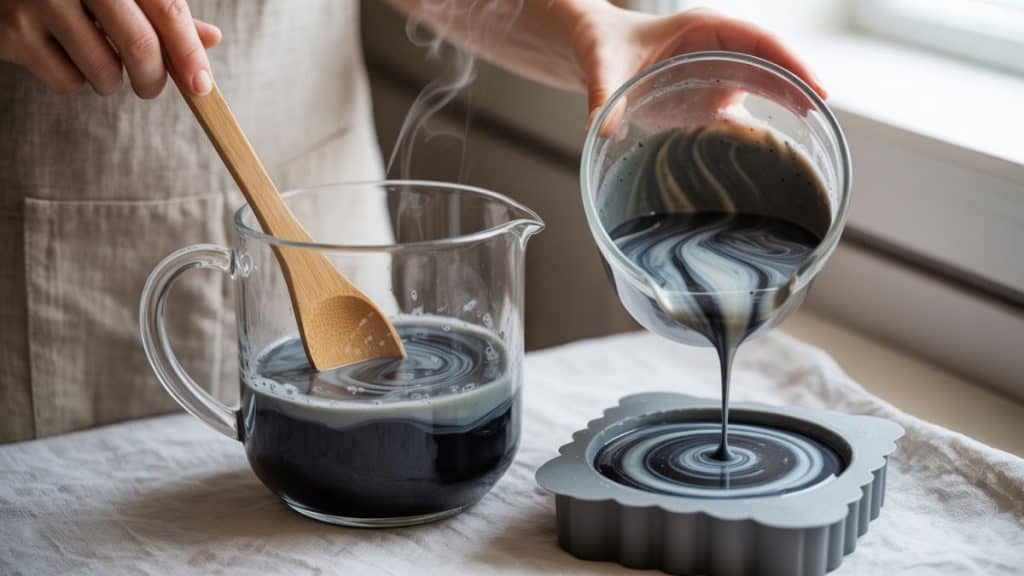
This universal method works for all charcoal melt and pour soap recipes, no matter which scent, design, or soap base you choose. Once you understand these simple steps, you’ll be able to confidently create soaps for personal use, gifting, or small-batch selling.
Melting the Base
Start by cutting your melt and pour soap base into small, even cubes. This helps it melt smoothly and evenly. Place the cubes into a microwave-safe container or double boiler.
If using a microwave, heat the soap in short 20–30 second intervals, stirring gently between each round. Avoid boiling the soap, as overheating can cause cloudiness and reduce lather quality. The goal is fully melted, clear (or creamy) soap with no solid chunks remaining.
Mixing Charcoal Properly
Once the soap base is fully melted, allow it to cool slightly for a minute or two. In a small bowl, mix your activated charcoal with a tablespoon of melted soap or a few drops of carrier oil to create a smooth slurry. This step prevents clumping and ensures even color throughout the bar.
Gently stir the charcoal mixture into the melted soap, mixing slowly until the color is fully incorporated and uniform.
Adding Fragrance
When the soap has cooled slightly but is still fully liquid, add your essential oils. Stir gently to distribute the fragrance evenly without introducing air bubbles. Adding fragrance at the right temperature helps preserve the scent and prevents evaporation.
If you’re making soap for gifting or selling, keep fragrance levels moderate for a clean, balanced bar that appeals to a wider audience.
Pouring and Setting
Carefully pour the charcoal soap mixture into silicone molds. Pour slowly to avoid creating bubbles. If bubbles appear on the surface, lightly spritz the top with rubbing alcohol to remove them.
Allow the soap to sit undisturbed at room temperature until fully set. Most melt and pour soaps harden within 1–2 hours, depending on mold size and room temperature.
Unmolding and Curing
Once the soap is completely firm and cool to the touch, gently remove it from the mold. While melt and pour soap doesn’t require long curing times, letting the bars rest for 12–24 hours improves firmness and durability especially important if the soaps will be wrapped, gifted, or sold.
Store finished bars in a cool, dry place away from direct sunlight until ready to use or package.
Charcoal Soap Design and Texture Ideas
Charcoal melt and pour soap is incredibly versatile when it comes to visual style and texture. With just small changes in soap base, pouring method, or finishing touches, you can create bars that feel modern, rustic, dramatic, or spa-like. These design ideas are perfect for experimenting creatively and for tailoring soaps to different uses like everyday home bars, gifts, or selling collections.
Smooth and Minimalist
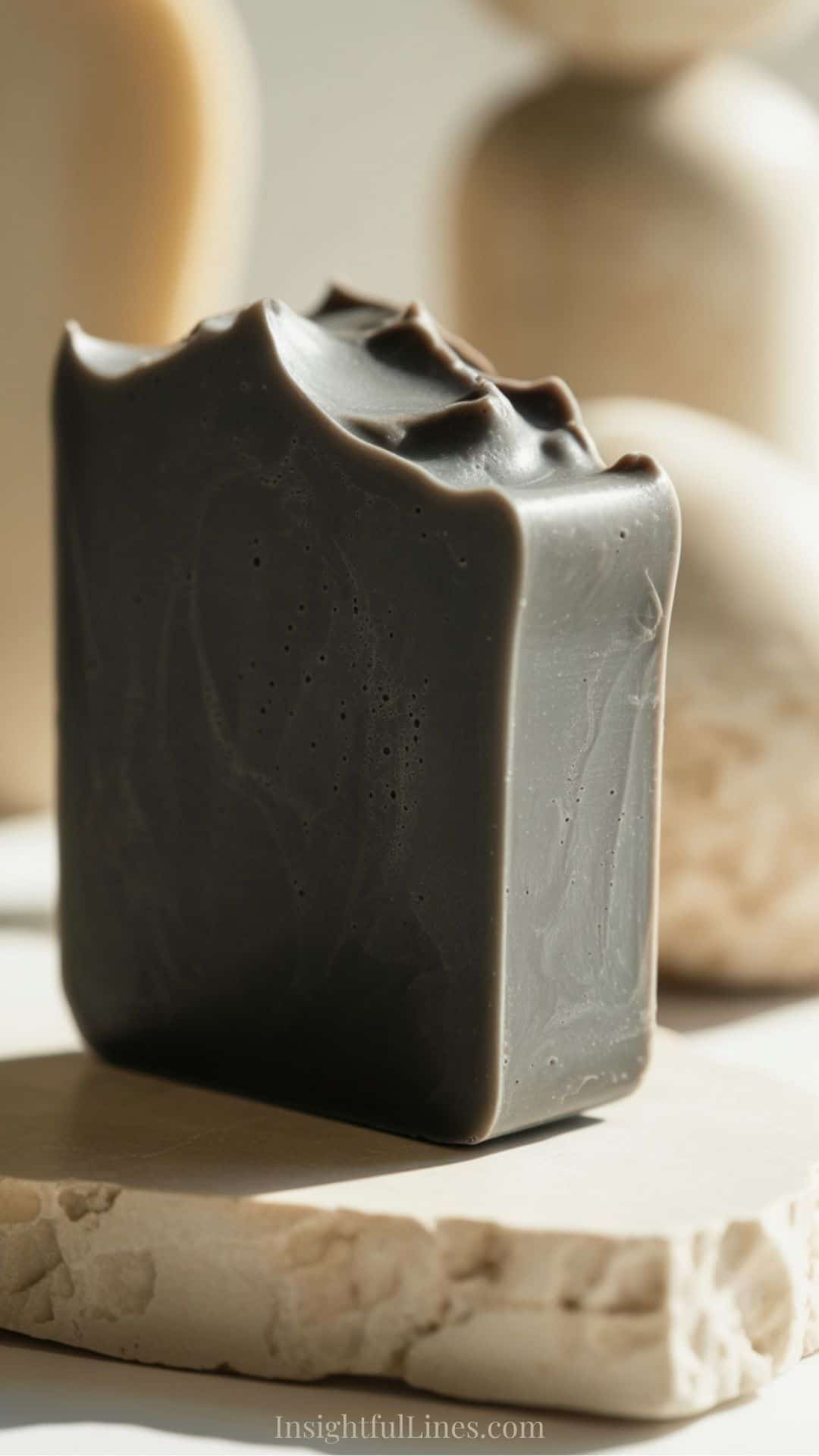
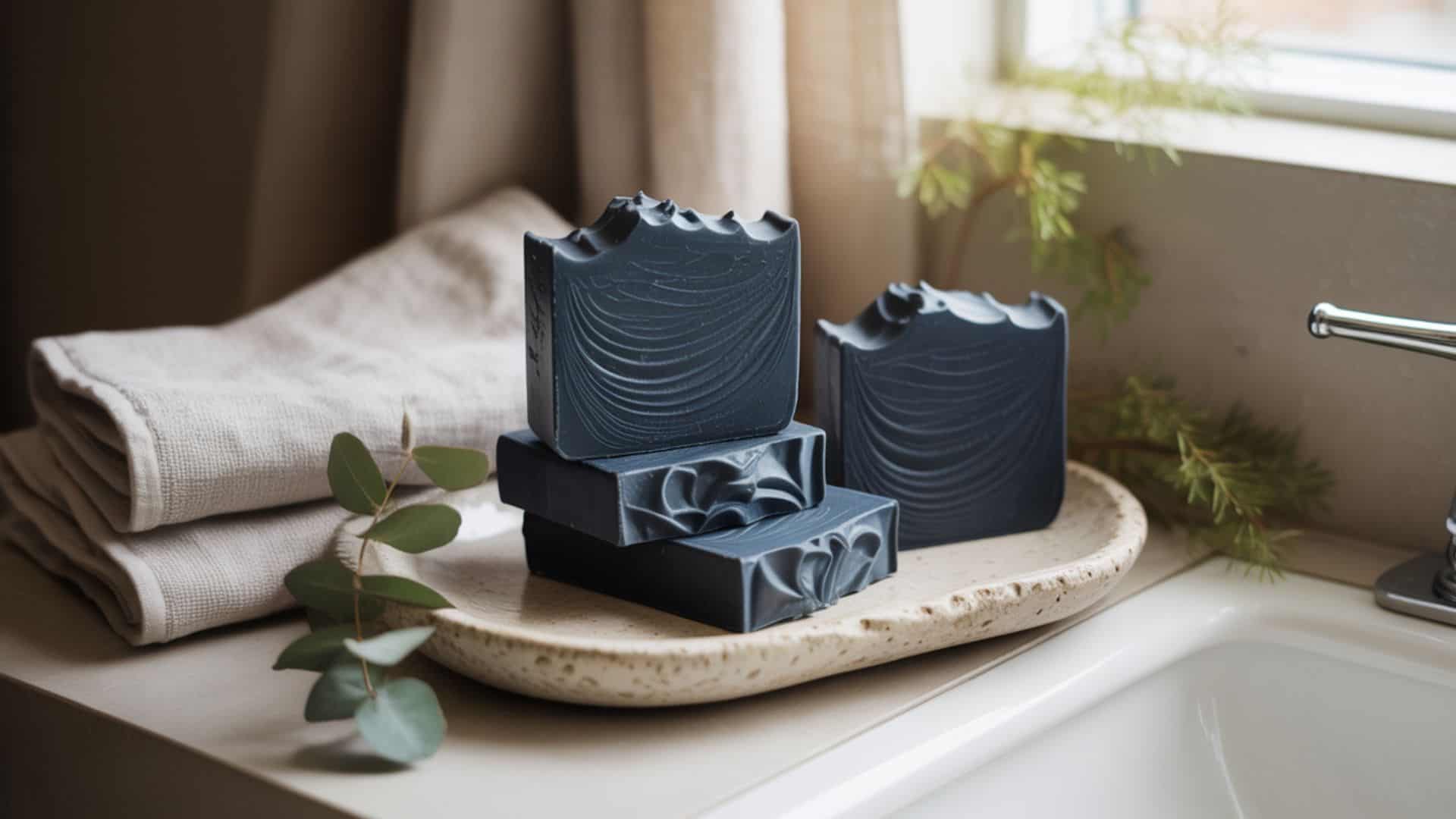
Smooth charcoal soaps with clean edges and a matte or satin finish feel modern and timeless. These bars focus on simplicity solid color, crisp lines, and subtle texture. This style works especially well with clear or white soap bases and appeals to minimalist and luxury-inspired aesthetics.
Swirls and Layers
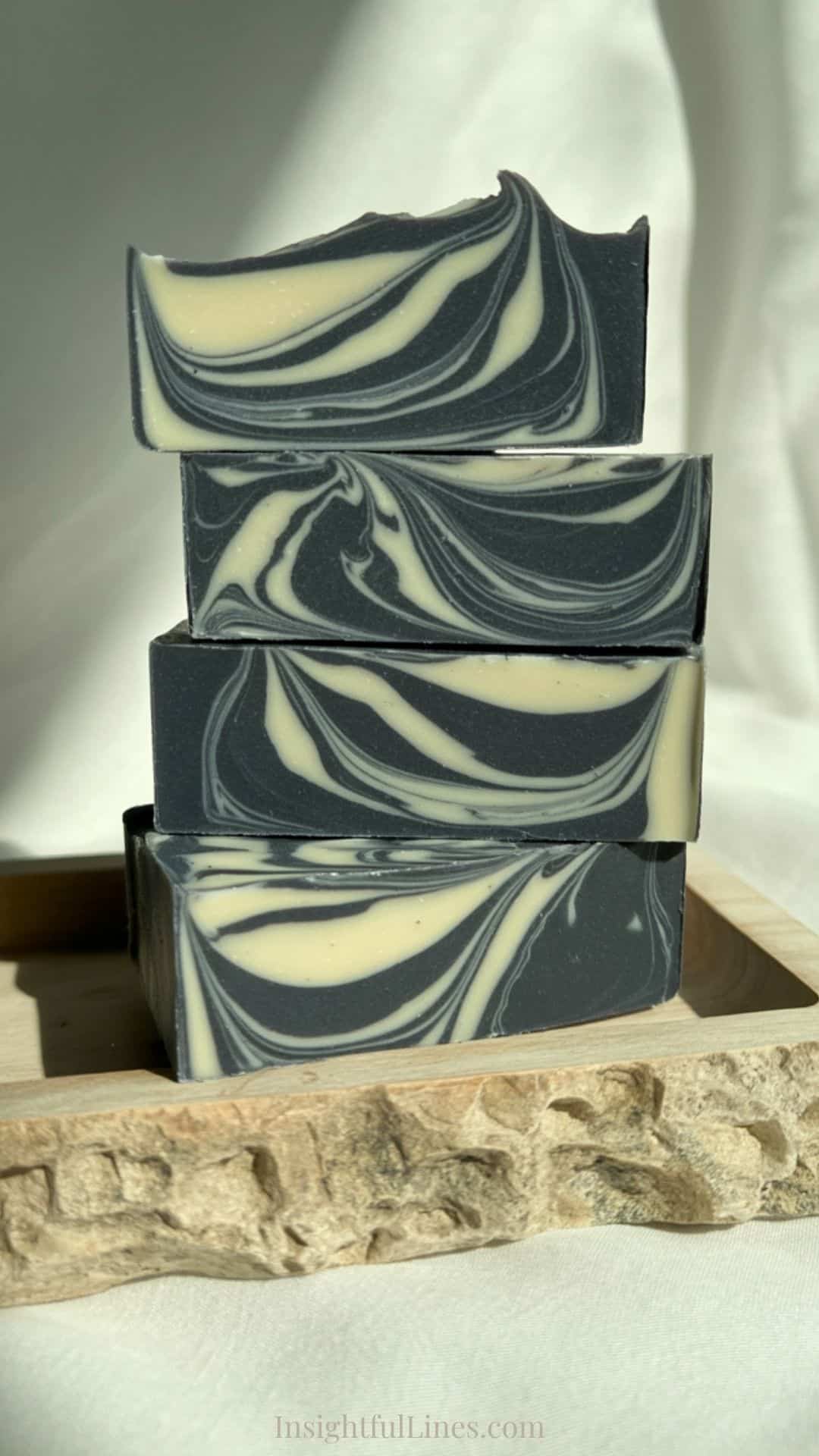
Swirled and layered charcoal soaps add visual movement and contrast without complicated techniques. Black and white swirls create a marble effect, while layered designs allow you to combine charcoal with creamy soap bases for bold, structured bars. These styles are eye-catching and perfect for statement soaps.
Botanical Accents
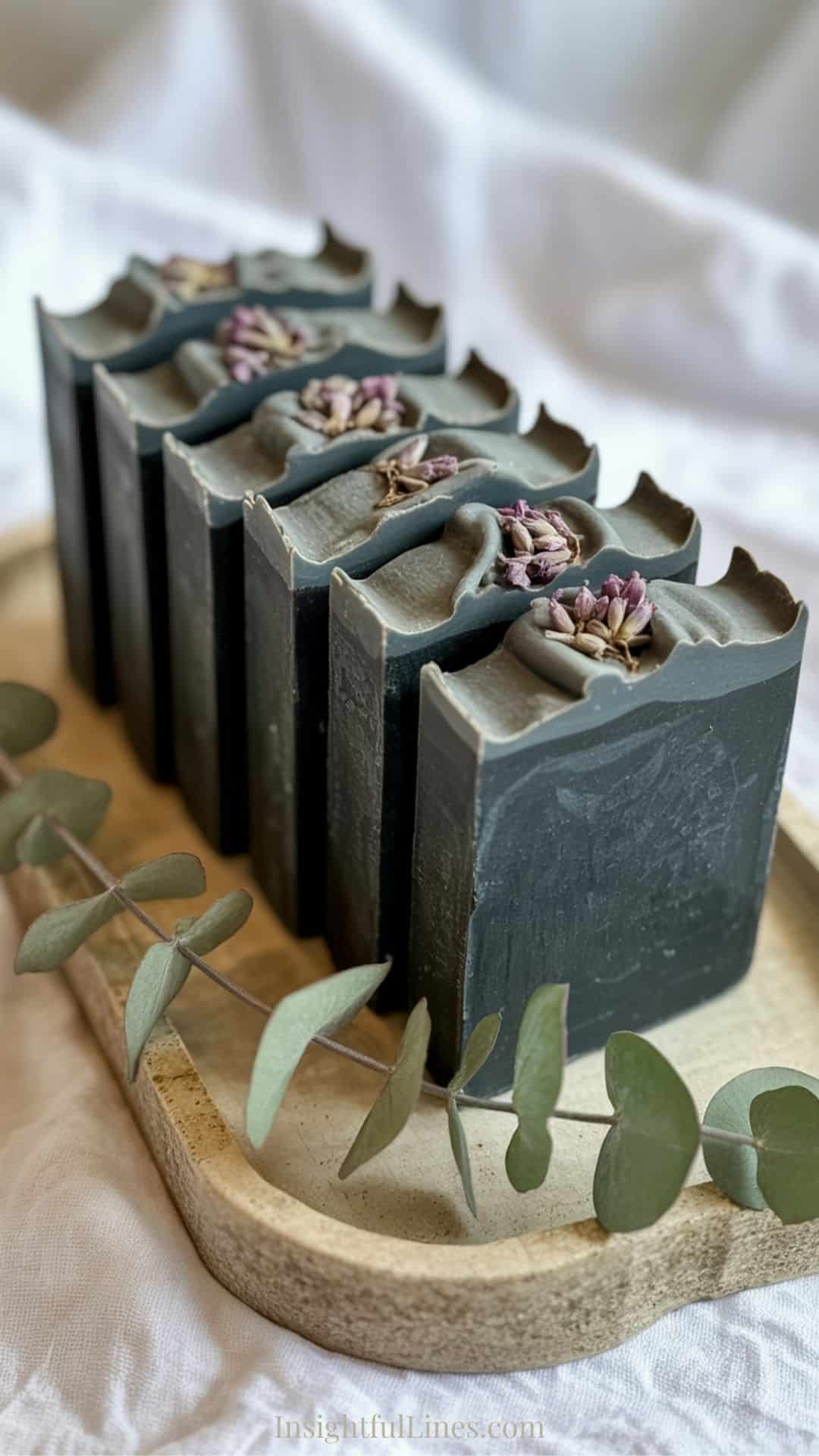
Adding light botanical elements such as dried herbs or subtle plant accents can soften the bold look of charcoal soap. Botanicals work best when used sparingly as surface decoration rather than mixed throughout the bar, creating an organic, handcrafted feel that’s ideal for gifting and seasonal soaps.
Charcoal Soap Texture: Smoky Translucent
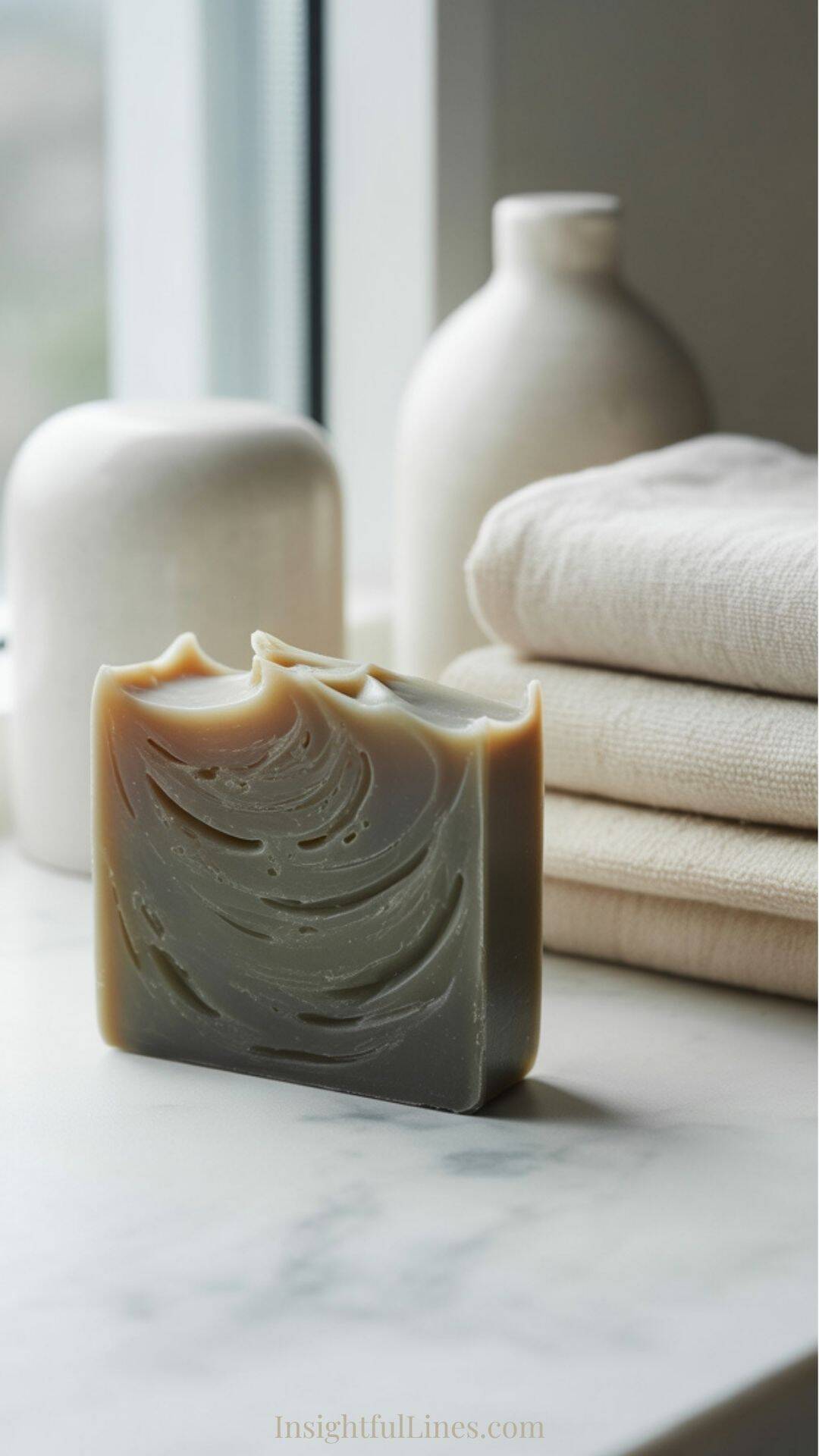
Using a clear melt and pour base creates a smoky, semi-translucent charcoal soap that looks modern and dramatic. Light passing through the bar reveals subtle depth and variation, making this style especially striking for bathroom displays and Pinterest images.
Rustic Charcoal Soap Texture
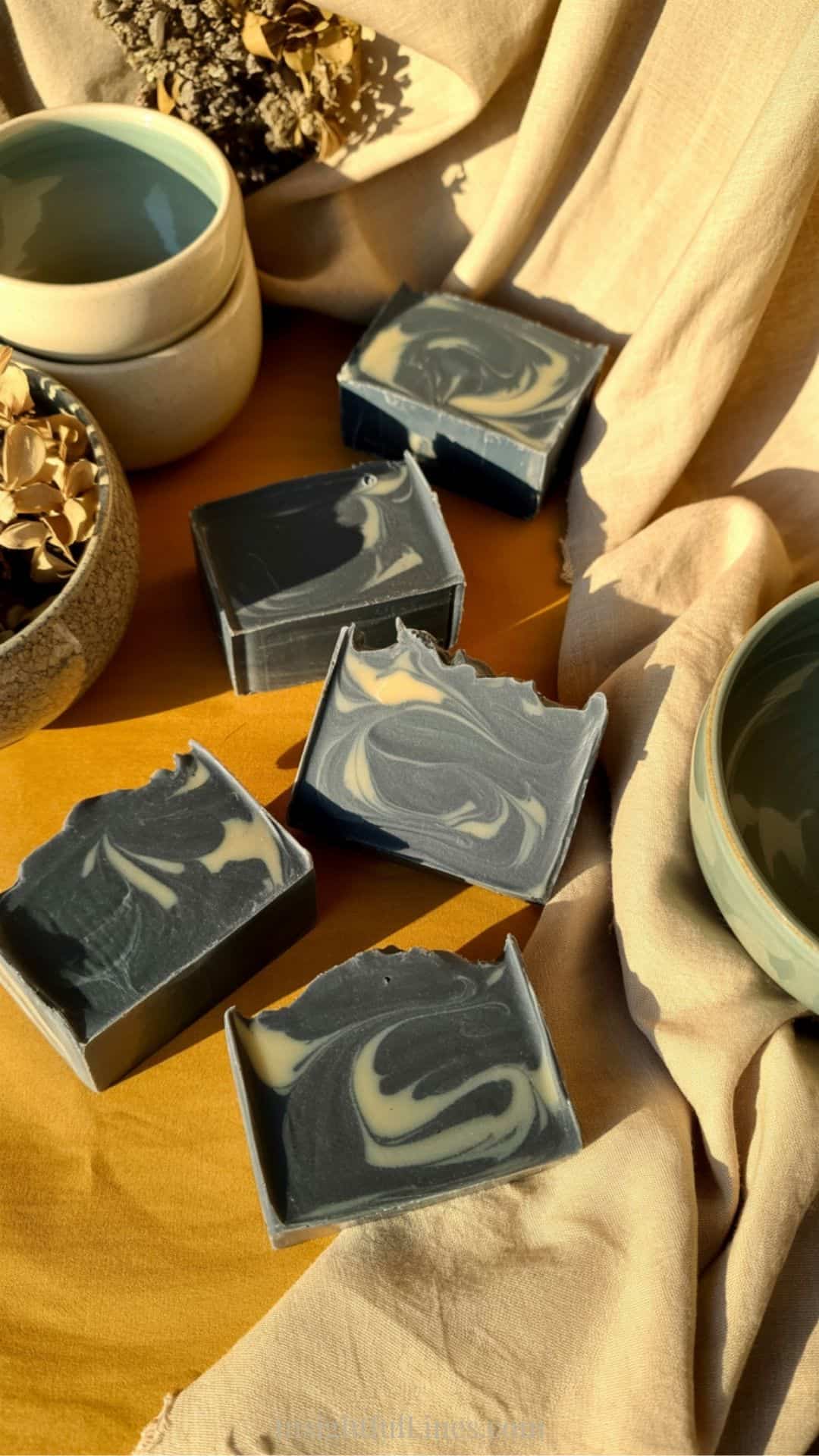
Rustic charcoal soaps feature slightly uneven edges, natural textures, and an artisan finish. These bars often pair beautifully with linen wraps, kraft packaging, and earthy styling. The look feels authentic and handmade perfect for small-batch collections and market-style soaps.
Masculine vs Spa Styles
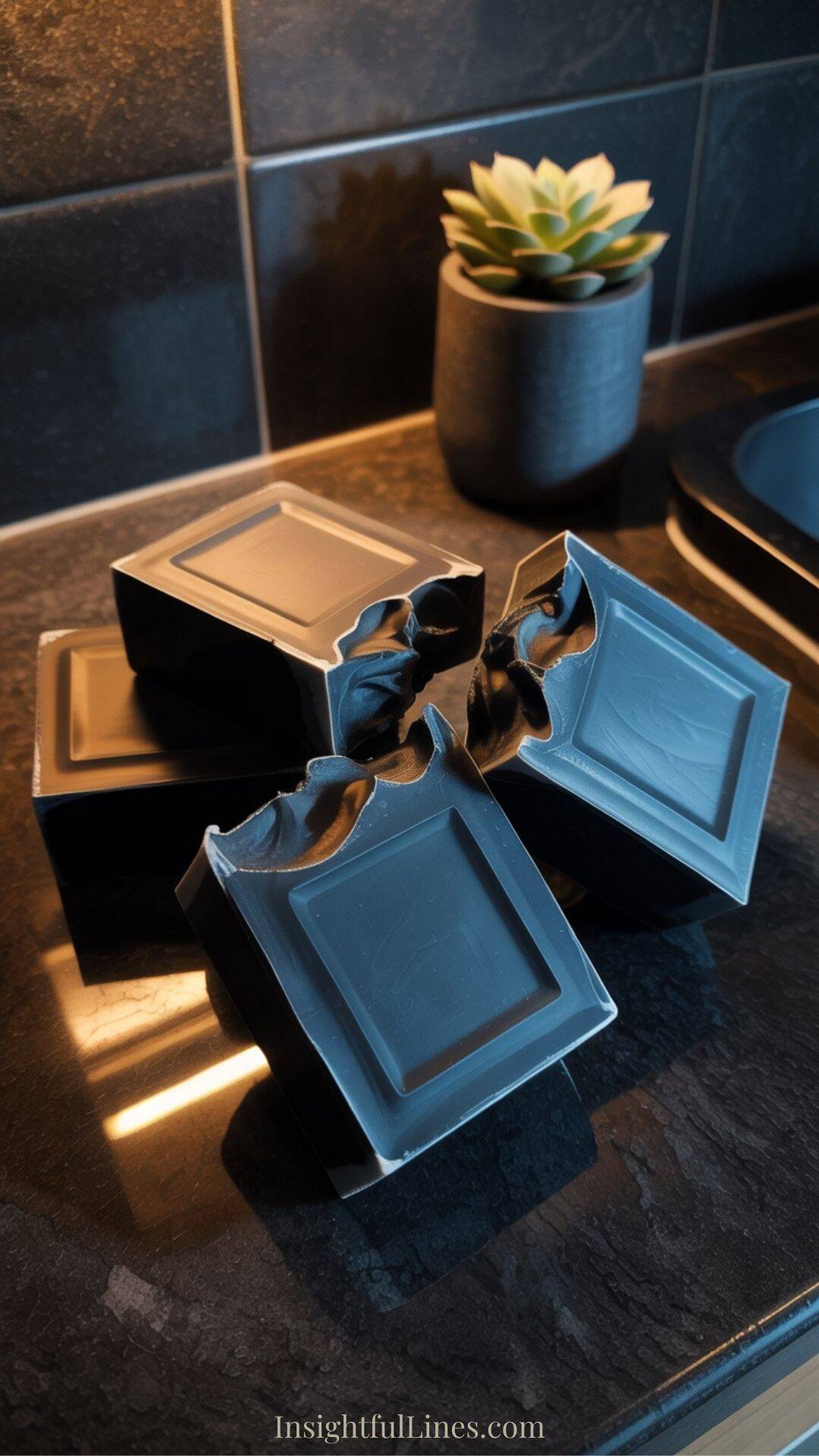
Charcoal soap naturally suits both masculine and spa-inspired designs.
Spa styles favor softer greys, rounded shapes, gentle swirls, and calming finishes that feel clean and restorative.
Masculine styles lean toward deep black tones, sharp edges, and simple rectangular molds, often paired with wood or stone styling.
Charcoal Soap Cut Bar Detail Shot
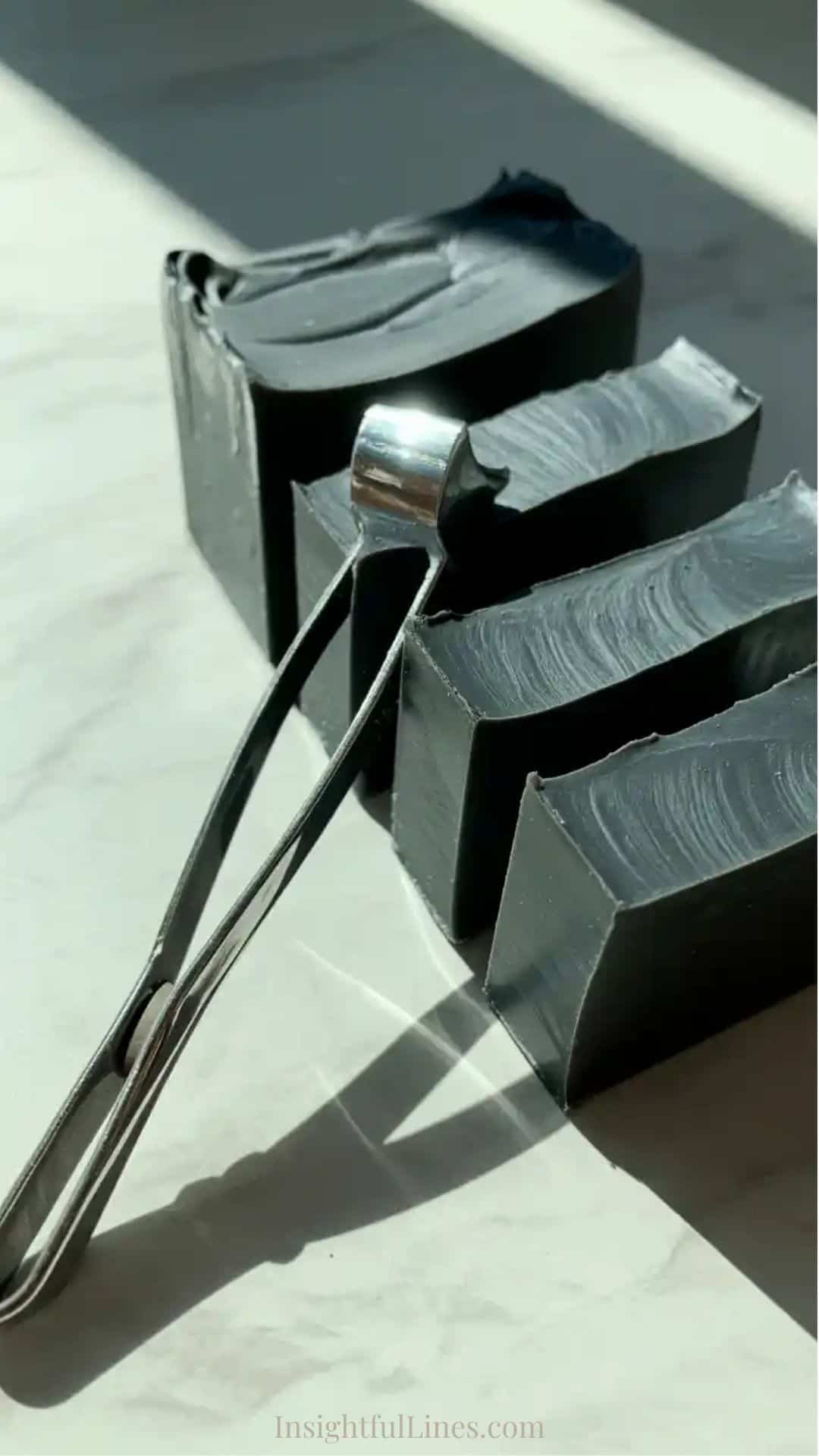
A freshly cut charcoal soap bar reveals the interior texture and color, offering a behind-the-scenes look at craftsmanship. Cut-bar designs highlight smooth interiors, clean layers, and swirl patterns, making them ideal for tutorial visuals, blog content, and trust-building imagery for buyers.
Storage & Care for Charcoal Melt and Pour Soap
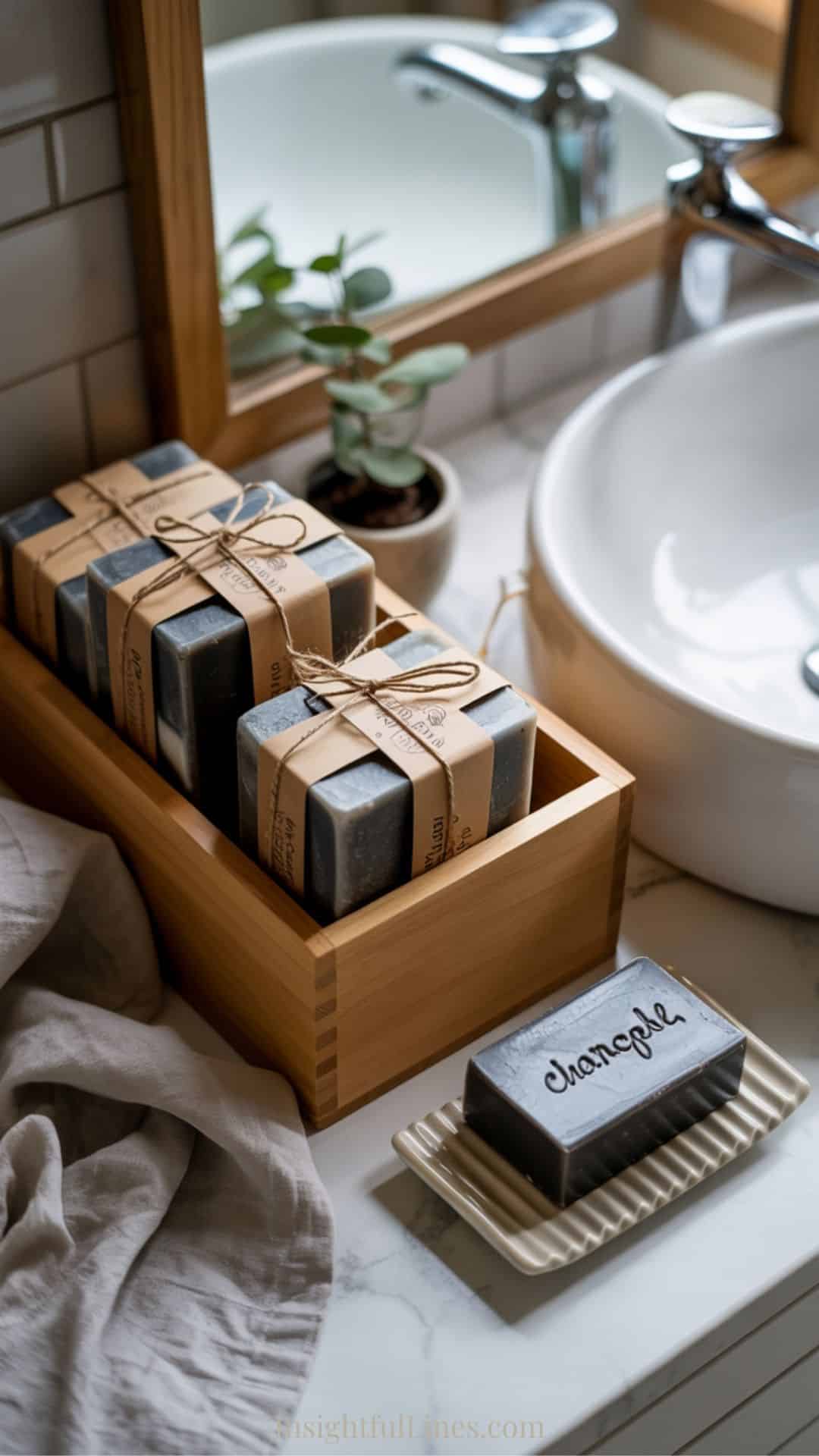
Proper storage and care help your charcoal melt and pour soap last longer, look better, and perform well especially important if you’re gifting or selling your handmade bars. A few simple habits will keep your soaps firm, fresh, and visually appealing.
Let Soaps Rest Before Wrapping
After unmolding, allow charcoal soaps to rest for 12–24 hours before wrapping or using. This short resting period helps excess moisture evaporate and gives the bars time to fully firm up, reducing dents or fingerprints.
Store in a Cool, Dry Place
Charcoal melt and pour soap should be stored away from heat, humidity, and direct sunlight. Warm or damp environments can cause sweating (also known as glycerin dew) and soften the soap. A cool pantry, cupboard, or storage box lined with paper works well.
Prevent Glycerin Dew
Melt and pour soap naturally attracts moisture from the air. To minimize glycerin dew:
- Wrap soaps tightly in plastic wrap or shrink wrap
- Store unwrapped soaps in an airtight container
- Avoid storing soap in humid bathrooms until ready for use
This is especially important if you live in a warm or humid climate.
Care During Use
For everyday use, place charcoal soap on a well-draining soap dish between washes. Allowing the bar to dry completely between uses helps it last longer and keeps the surface smooth rather than mushy.
Shelf Life Expectations
When stored properly, charcoal melt and pour soap typically lasts 12 months or longer. While the soap remains safe to use beyond this timeframe, scent strength may gradually fade over time, especially if essential oils are used.
Handling for Gifts or Selling
If you plan to gift or sell your soaps, handle them with clean, dry hands to prevent smudges or fingerprints. Wrapping soaps shortly after their resting period helps preserve both appearance and fragrance until they reach their final home.
Charcoal Soap FAQs
If you’re new to making or using charcoal melt and pour soap, these frequently asked questions will help clear up common concerns and give you confidence as you work with this popular ingredient.
Is activated charcoal safe for skin?
Yes. Cosmetic-grade activated charcoal is safe for skin when used properly in soap. It’s finely processed to remove impurities and is commonly used in cleansers and masks. Always make sure the charcoal you use is labeled for cosmetic use.
Will charcoal soap stain my skin or bathroom?
Charcoal soap should not stain your skin when used correctly. Any temporary grey residue rinses off easily with water. To avoid staining sinks or washcloths, rinse surfaces after use and allow soap bars to dry completely between uses.
Is charcoal soap good for sensitive skin?
Charcoal soap can be suitable for sensitive skin, especially when made with gentle bases like goat milk or fragrance-free formulas. If you have very sensitive skin, start with a mild scent or no fragrance and do a patch test before regular use.
Can charcoal soap be used daily?
Yes. Most charcoal melt and pour soaps are gentle enough for daily use on the face or body. The key is using the right amount of charcoal and choosing skin-friendly essential oils or keeping the soap unscented.
Why does my charcoal soap look streaky or speckled?
Streaks or speckles usually occur when charcoal isn’t mixed thoroughly. Creating a smooth charcoal slurry before adding it to melted soap helps prevent uneven coloring.
Does charcoal soap really help with oily skin?
Charcoal is known for its oil-absorbing properties, which makes it popular for oily and combination skin types. While it’s not a medical treatment, many people find charcoal soap leaves their skin feeling cleaner and more balanced.
How long does charcoal melt and pour soap last?
When stored properly in a cool, dry place, charcoal melt and pour soap typically lasts 12 months or longer. Over time, scent may fade slightly, but the soap remains safe to use.
Final Thoughts
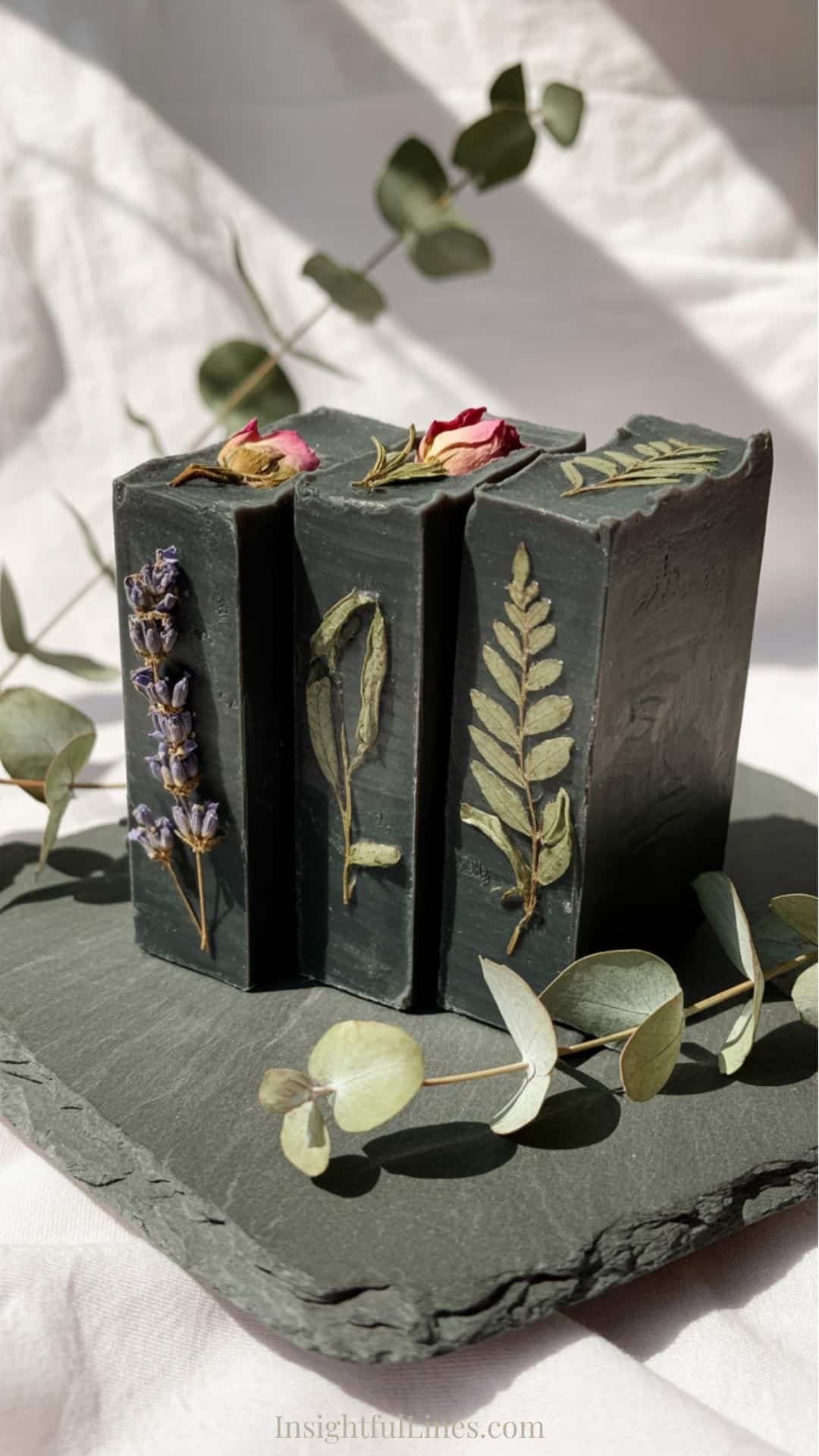
Charcoal melt and pour soap is a wonderful place to start or expand your handmade soap journey. It’s approachable for beginners, flexible for creativity, and polished enough to produce beautiful, professional-looking bars without complicated techniques. With just a few supplies and a little practice, you can create soaps that feel intentional, calming, and thoughtfully crafted.
Once you understand the basics how to melt the base, mix charcoal properly, choose designs, and care for finished bars you’re free to experiment with textures, scents, and styles that suit your home, your gift-giving needs, or your small creative business goals.
If you’re ready to take the next step, explore this collection of easy melt and pour soap recipes designed for all levels: Melt and Pour Soap Recipes for Beginners & Beyond charcoal melt and pour soap recipes.
That article features a variety of creative recipes (not just charcoal), giving you even more inspiration to expand your soap making from daily use bars to thoughtful gifts and small-batch products you can sell.
Happy soap making!