
Alice in Wonderland Costume Designs: A Comprehensive Guide
Step through the looking glass into the whimsical world of Alice in Wonderland costume designs. From the iconic blue dress with white apron to the Mad Hatter’s eccentric ensemble, these characters have captivated costume enthusiasts for generations. Whether you’re planning for Halloween, a themed party, or a theatrical production, understanding the evolution and elements of these beloved characters can help you create or find the perfect Wonderland costume.
This guide explores the historical journey of Alice in Wonderland costumes, breaks down essential elements for key characters, offers DIY creation tips, and examines professional approaches used in theater and film. We’ll also look at the cultural impact of these designs and provide resources for finding authentic costumes.

This website contains affiliate links. As an Amazon Associate, I earn from qualifying purchases. Please read our disclaimer.
Historical Evolution of Alice in Wonderland Costumes
The journey of Alice in Wonderland costume designs begins with Sir John Tenniel’s iconic illustrations for Lewis Carroll’s original 1865 publication. These detailed black and white drawings established the visual foundation for how we perceive these characters today. Tenniel’s Alice wore a puffed-sleeve dress with a pinafore apron, striped stockings, and a simple headband – elements that remain recognizable over 150 years later.
Victorian Era to Early Adaptations
Early costume interpretations closely followed Tenniel’s illustrations, with Victorian-era theatrical productions emphasizing period-appropriate details. The first significant evolution came with the 1903 silent film, where costume designers added their own interpretations while maintaining Tenniel’s core elements. These early adaptations established a pattern of respecting the source material while allowing for creative expression.
Disney’s Influence
The 1951 Disney animated film revolutionized Alice in Wonderland costume designs, introducing vibrant colors and simplified silhouettes that became instantly recognizable. Disney’s Alice featured a light blue dress with a white pinafore, black headband, and blonde hair a look that would become the standard reference for decades. Similarly, their interpretations of the White Rabbit, Mad Hatter, and Queen of Hearts established color schemes and design elements that remain influential.
Modern Reinterpretations
Tim Burton’s 2010 film marked another watershed moment, introducing darker, more elaborate costume designs that emphasized texture and asymmetry. Colleen Atwood’s Oscar-nominated costume designs for characters like the Mad Hatter brought new dimensions to these familiar figures, inspiring countless cosplayers and Halloween enthusiasts to embrace more complex interpretations.
Key Costume Elements for Main Characters
Women’s Alice Costume

| The quintessential Alice costume centers around these key elements: | For an authentic touch, consider these details: |
|---|---|
| Light blue knee-length dress with puffed sleeves | Period-appropriate petticoat for volume |
| White pinafore apron with pockets | Embroidered or lace-trimmed apron edges |
| Black headband or ribbon | Small golden key accessory |
| White tights or stockings | “Drink Me” bottle prop |
| Black Mary Jane shoes | Victorian-style button details |
| Blonde hair (often with a wig for authenticity) |
 Buy Now →
 Mad Hatter

| The Mad Hatter’s eccentric appearance includes: | Style variations based on adaptations: |
|---|---|
|
|
 Buy Now →
 Queen of Hearts

| The imperious Queen of Hearts requires these essential elements: | |
|---|---|
|
|
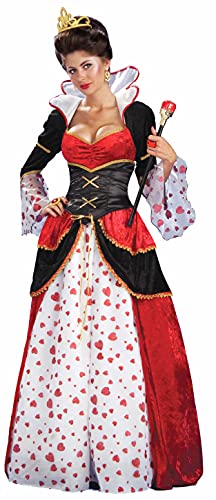 Buy Now →
 White Rabbit

| White Rabbit essential elements: | |
|---|---|
|
|
 Buy Now →
 Cheshire Cat

| Cheshire Cat distinctive features: | |
|---|---|
|
|
 Buy Now →
 DIY Alice in Wonderland Costume Creation Tips

Creating your own Alice in Wonderland costumes can be both rewarding and cost-effective. With some basic sewing skills and creativity, you can craft unique interpretations of these beloved characters. Here are practical tips and material suggestions for bringing Wonderland to life:
Material Suggestions
Alice
- Light blue cotton or poplin fabric
- White cotton for apron
- Black ribbon for headband
- White lace trim for apron edges
- Small bottle for “Drink Me” prop
Mad Hatter
- Felt or craft foam for hat
- Colorful patterned fabrics for clothing
- Ribbon for bow tie
- Craft paper for 10/6 price tag
- Thrift store suit pieces for upcycling
Queen of Hearts
- Red and black fabric
- Playing cards for decoration
- White felt for collar
- Cardboard for crown base
- Heart-shaped embellishments
Practical Creation Tips
| For Beginners | For Advanced Crafters |
|---|---|
|
|
Quick Character Transformations
White Rabbit
Transform a white hoodie by adding ears to the hood, attaching a cotton ball tail, and accessorizing with a pocket watch and glasses.
Cheshire Cat
Use purple and pink striped clothing as a base, add cat ears, and create a wide grin with face paint. Attach a matching striped tail for the complete look.
Card Soldiers
Construct a sandwich board from cardboard painted as playing cards, wear black clothing underneath, and add simple spear props made from dowels.
Professional Costume Design Approaches

Professional costume designers approach Alice in Wonderland with meticulous attention to detail, historical context, and practical considerations for performance. Their techniques can inspire both theatrical productions and advanced cosplay creations.
Theatrical Production Techniques
Stage costume designers focus on:
- Visibility from a distance through exaggerated elements
- Durability for multiple performances
- Quick-change capabilities with strategic closures
- Movement considerations for dancing and physical action
- Color choices that work under stage lighting
Common theatrical adaptations:
- Oversized accessories for visibility
- Bright, contrasting color palettes
- Stylized makeup for character definition
- Lightweight materials for performer comfort
- Washable fabrics for maintenance
Film Production Approaches
Film costume designers like Colleen Atwood (Tim Burton’s Alice in Wonderland) and Paco Delgado (Alice Through the Looking Glass) employ these techniques:
- Historical research for period authenticity
- Custom fabric creation and dyeing
- Layering of textures for camera depth
- Multiple versions of costumes for different scenes
- Weathering techniques for character storytelling
- Integration with CGI and special effects
- Close collaboration with makeup and hair departments
- Symbolic color choices for character development
- Practical effects like Alice’s size changes
- Incorporation of period-accurate construction methods
Professional Construction Techniques
Structured Elements
- Boning for bodices and collars
- Millinery techniques for hat construction
- Internal harnesses for oversized elements
- Corsetry for period silhouettes
Fabric Manipulation
- Hand-painting for custom patterns
- Distressing for aged appearances
- Appliqué for decorative elements
- Fabric layering for texture
Finishing Touches
- Hand embroidery for details
- Airbrushing for color gradients
- Aging techniques with paint and dye
- Custom hardware and closures
Cultural Impact and Popular Variations

Alice in Wonderland costumes have transcended their literary origins to become cultural icons, inspiring countless variations across different media, subcultures, and fashion movements. These interpretations reflect both the enduring appeal of Carroll’s characters and their adaptability to different aesthetic sensibilities.
Subcultural Interpretations
Gothic Alice
Dark interpretations featuring black and blue color schemes, Victorian gothic elements, and macabre accessories. American McGee’s Alice video game popularized this aesthetic with blood-splattered aprons and weaponized accessories.
Steampunk Wonderland
Brass goggles, gears, and mechanical elements integrated into traditional character designs. The Mad Hatter often features clockwork hat decorations, while Alice might wear a modified pinafore with brass buttons and leather accents.
Lolita Fashion
Japanese street fashion heavily influenced by Alice’s silhouette, featuring exaggerated pinafores, petticoats, and headbands. Sweet Lolita in particular draws direct inspiration from Alice’s innocent appearance.
Media Adaptations
Animation Influences
- Disney’s 1951 film established the iconic blue dress
- Anime adaptations often feature exaggerated proportions
- “Alice in Wonderland: Once Upon a Time in Wonderland” introduced action-oriented costume elements
- Video game interpretations like “Alice: Madness Returns” created weaponized costume variations
Live-Action Evolutions
- Tim Burton’s films revolutionized the color palette and textures
- SyFy’s “Alice” miniseries created modern, edgy interpretations
- Broadway productions added musical theater flair and mobility
- “The Looking Glass Wars” novels inspired militaristic Alice variations
Fashion and Contemporary Art
High fashion has repeatedly drawn inspiration from Wonderland, with designers creating runway collections that reinterpret these iconic characters:
- Comme des Garçons’ deconstructed Alice silhouettes
- Alexander McQueen’s darkly romantic Wonderland-inspired pieces
- Thom Browne’s Mad Hatter-influenced menswear
- Vivienne Westwood’s punk interpretations of the Queen of Hearts
- Marc Jacobs’ playful takes on Wonderland motifs
- Anna Sui’s whimsical Cheshire Cat patterns
Where to Find Authentic Alice in Wonderland Costumes

Whether you’re looking for a ready-made costume or specialized components to complete your Wonderland ensemble, numerous resources are available for every budget and quality level. Here’s a comprehensive guide to finding authentic Alice in Wonderland costumes:
Online Specialty Retailers
Premium Costume Shops
- HalloweenCostumes.com – Extensive selection of licensed designs
- CosplaySky – High-quality character replicas
- Etsy (custom makers) – Handcrafted, unique interpretations
- Museum Replicas – Period-accurate Victorian elements
Theatrical Suppliers
- Theatrical Shop – Professional-grade costumes
- Rose Costumes – Rental and purchase options
- Boston Costume – Authentic theatrical designs
- Broadway Costumes – Stage-quality ensembles
Budget-Friendly Options
- Party City – Affordable complete sets
- Amazon – Wide range of price points
- eBay – Second-hand and vintage finds
- Walmart – Seasonal costume selections
Component Shopping
For those looking to assemble custom costumes piece by piece:
Clothing Foundations
- Vintage clothing stores for period-appropriate bases
- ModCloth for retro-inspired dresses
- Historical clothing retailers for Victorian pieces
- Thrift stores for budget-friendly options to modify
Accessories & Props
- Elope for character-specific hats and accessories
- Craft stores for DIY materials
- Specialty wig shops for character-accurate hair
- Prop replica sites for authentic pocket watches and scepters
Seasonal Availability
The best times to shop for Alice in Wonderland costumes:
Peak Season (August-October)
Widest selection available but at premium prices. Pre-order for popular characters to avoid sellouts.
Off-Season (November-July)
Significant discounts available, especially November-December. Limited selection but better prices.
Year-Round Options
Specialty cosplay shops and custom makers offer Alice in Wonderland costumes regardless of season.
Creating Your Wonderland
Alice in Wonderland costume designs continue to captivate our imagination with their blend of Victorian charm and fantastical whimsy. Whether you’re drawn to the historical accuracy of Tenniel’s original illustrations, the colorful vibrancy of Disney’s interpretation, or the dark complexity of Burton’s vision, there’s a Wonderland aesthetic that speaks to every costume enthusiast.
Remember that the most successful Alice in Wonderland costumes balance recognizable character elements with personal creative expression. Whether purchasing a complete costume or crafting your own DIY creation, attention to the key identifying features of each character will ensure your Wonderland ensemble is instantly recognizable while still allowing room for your unique interpretation.
As the Cheshire Cat might say, we’re all a little mad here so embrace the wonderful madness of Wonderland costume design and create something truly magical for your next costume adventure!


