2026 Modern Bedroom Trends for a Fresh Calm Retreat
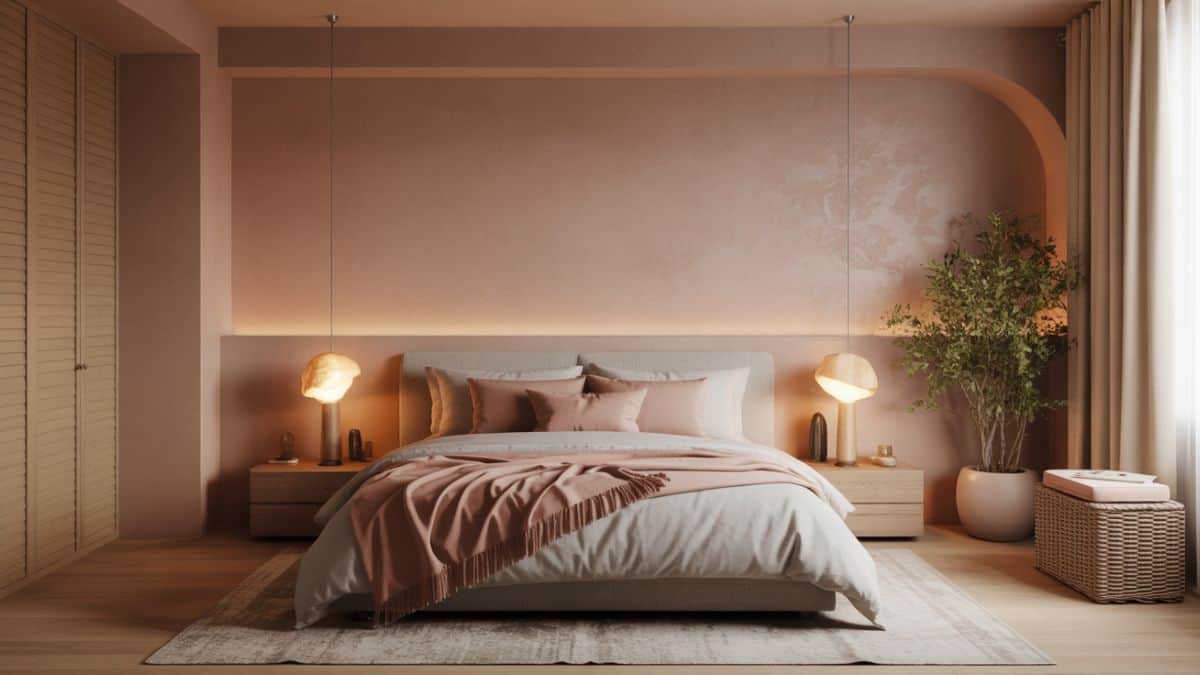
If you’ve been scrolling Pinterest lately, you’ve probably noticed a shift happening in bedroom design. It is all about warmth, texture, and deeply personal style. Sterile minimalism is fading, and in its place comes a softer, more lived-in look that feels like a hug the moment you walk in.
Earthy palettes are replacing cool greys. Textured walls and ceilings are quietly becoming the new luxury. Natural wood is back in a big way, and curated, meaningful decor is taking center stage. Bedrooms aren’t just places to sleep anymore they’re evolving into cozy sanctuaries where comfort and beauty blend effortlessly.
These ideas will help inspire you create a room that feels grounded, stylish, and uniquely yours.
This website contains affiliate links. As an Amazon Associate, I earn from qualifying purchases. Please read our disclaimer.
Mood-Driven Color Palettes (with AI Helping You Choose)
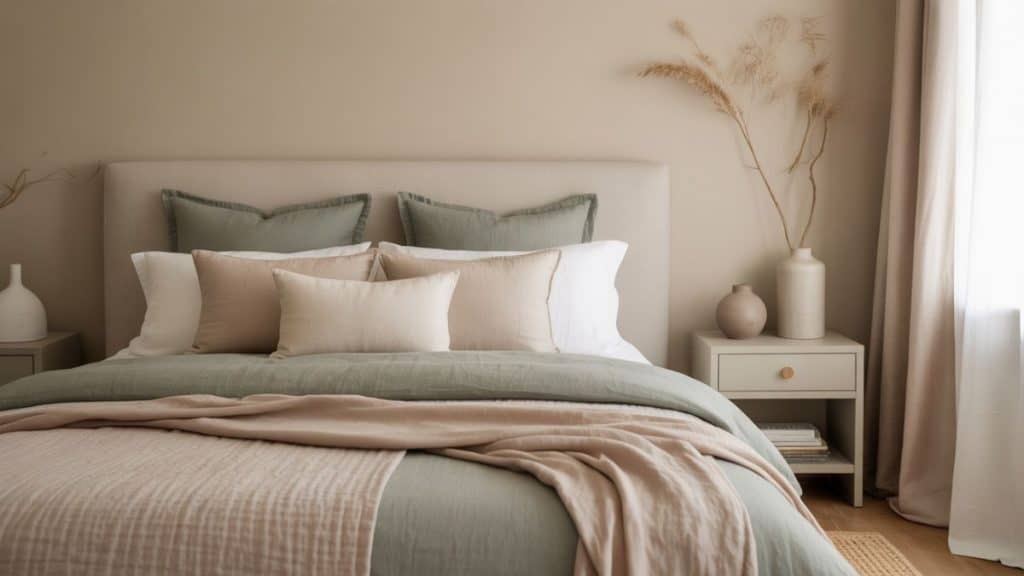
Choosing a bedroom color is less about following trends and more about choosing a feeling. Homeowners are moving away from generic “off-white or grey” and toward tones that support rest, creativity, or emotional calm.
Warm neutrals dominate because they shift beautifully under changing light. Clay beige feels grounding, mushroom taupe adds softness, and sage introduces quiet freshness. These hues create a cocoon effect that instantly transforms a room’s mood.
In the rise of AI-powered color tools. You can upload a photo of your bedroom, and apps will recommend hues based on lighting, angles, even room texture. These suggestions tend to be more accurate than choosing paint samples by eye.
How to try this trend:
- Upload a photo of your room to an AI paint tool (free online).
- Sample the top 2–3 suggested colors.
- Paint one wall section as a test with natural and artificial lighting.
- Choose the shade that feels right, not just looks good.
This is one of the fastest and cheapest ways to modernize your bedroom.
Helpful AI Paint + Color Tools to Try this Year
Choosing the right paint color can feel overwhelming, it has made it easier than ever. A new wave of free and low-cost color tools can analyze your room, adjust for lighting, and show you exactly how a shade will look before you even buy a sample pot. Whether you’re planning a full color-drenched makeover or just refreshing an accent wall, these tools make the process almost effortless.
Here are some of the best options to play with:
• Behr Paint Visualizer
Snap a photo of your space and let the tool automatically adjust the color previews based on your room’s natural and artificial lighting. Ideal for south- or north-facing bedrooms.
• Benjamin Moore Color Portfolio
Color-match inspiration photos or virtually paint your walls directly through the app. A must-have if you’re trying to recreate a specific shade you’ve seen online.
• Canva Color Palette Generator
Upload your favorite Pinterest bedroom image and pull the exact hex colors from it. A quick and easy way to get the right undertones before testing paint.
• Colormind
An AI palette generator that builds full-room color stories by analyzing design trends and uploaded photos. Perfect if you want your walls, bedding, and décor to feel cohesive.
• Coolors AI Palette Maker
Creates harmonious color palettes based on mood, texture, tone, or inspiration images. Great for picking accent colors or layering neutrals.
• Dulux Visualizer
Uses live AR technology so you can point your camera at the wall and “paint” it in real time. The accuracy is impressive, especially for textured surfaces.
• Paint AI by RemodelAI
Upload a photo of your bedroom and instantly see it “repainted” in different color options. It’s fast, accurate, and perfect for experimenting with bold ideas.
• Sherwin-Williams Color Expert
This smart app evaluates your room’s lighting and finishes, then recommends balanced hues from its curated palette.
• Valspar Color Visualizer
Upload your own photo or test colors on sample rooms. Their trending palettes like Woven Warmth and Organic Edge help you visualize full-color schemes.
Soft-Structure Minimalism
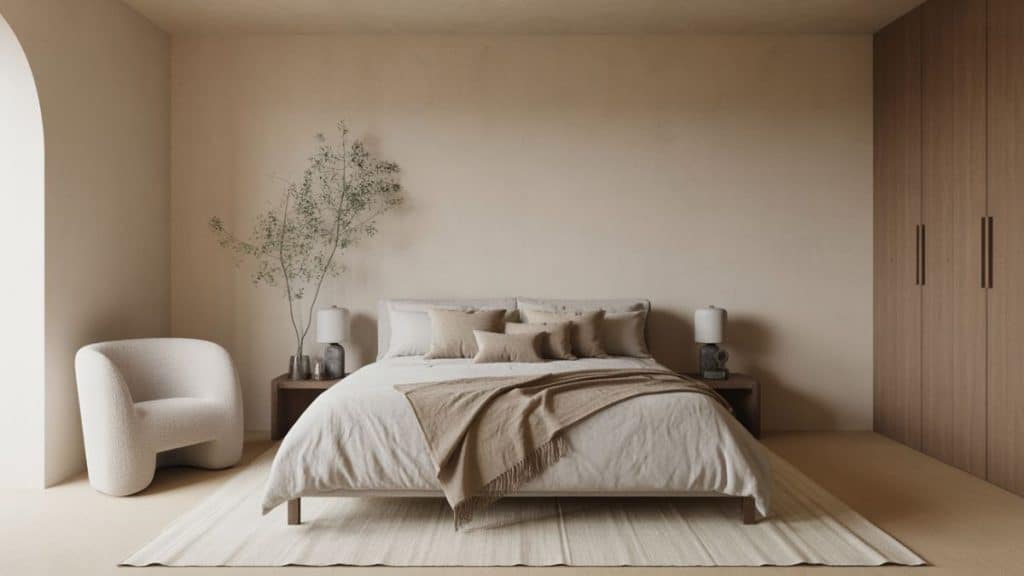
Minimalism is still here, but it has softened. Instead of cold, empty spaces, this year brings rooms that feel curated, calm, and lived-in without clutter. This trend is about texture over objects.
Soft-Structure minimalism blends clean silhouettes with organic materials to make your bedroom feel intentional yet warm. Imagine a room where the palette is simple, but every surface offers a tactile experience: linen bedding, a boucle chair, a matte ceramic lamp, a textured wall finish.
Ways to bring in Soft Structure:
- Swap shiny finishes for matte or brushed textures.
- Add a boucle throw to the foot of your bed.
- Use mineral paint or plaster for soft wall movement.
- Replace harsh metal décor with wood, rattan, or ceramic pieces.
- Keep surfaces mostly clear, but let one or two items be statement-worthy.
It’s the perfect blend of minimal, modern, and cozy.
Textured Walls & Artisan Finishes
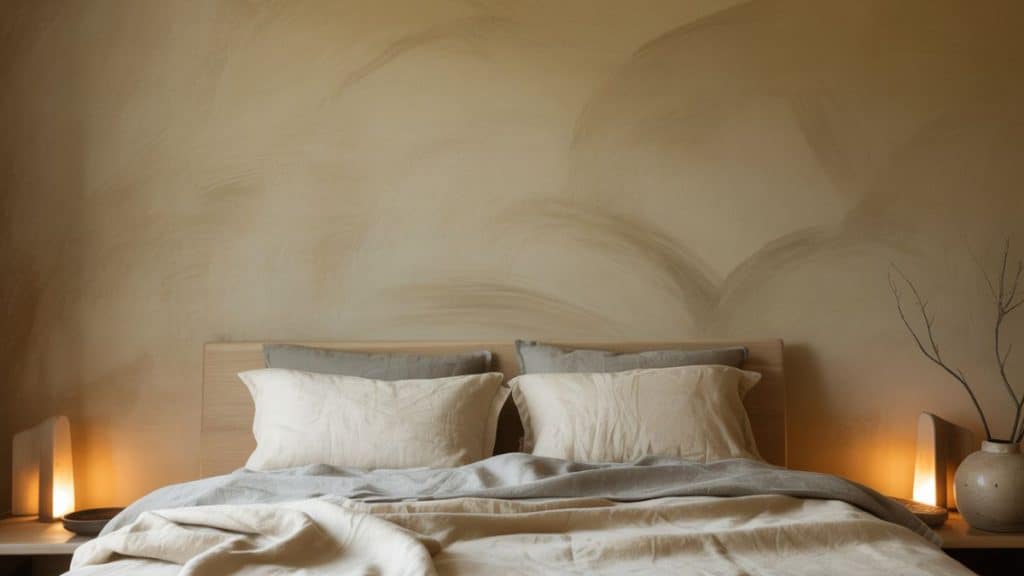
A smooth wall is no longer the default. This year bedrooms introduce subtle texture that adds depth and visual interest without overwhelming the space.
Popular finishes include:
- Limewash for a cloudlike, romantic feel
- Micro-cement for a stone-like modern look
- Venetian plaster for soft luxury
- Slatted or ribbed paneling (vertical lines make ceilings look taller)
- Hand-brushed paint techniques for organic movement
These textured surfaces elevate even small bedrooms, making them feel curated and high-end.
Budget-friendly idea: Try a DIY limewash kit or a textured roller to mimic an artisan finish without the cost of hiring a plaster expert.
Earthy Cocooning Color Schemes
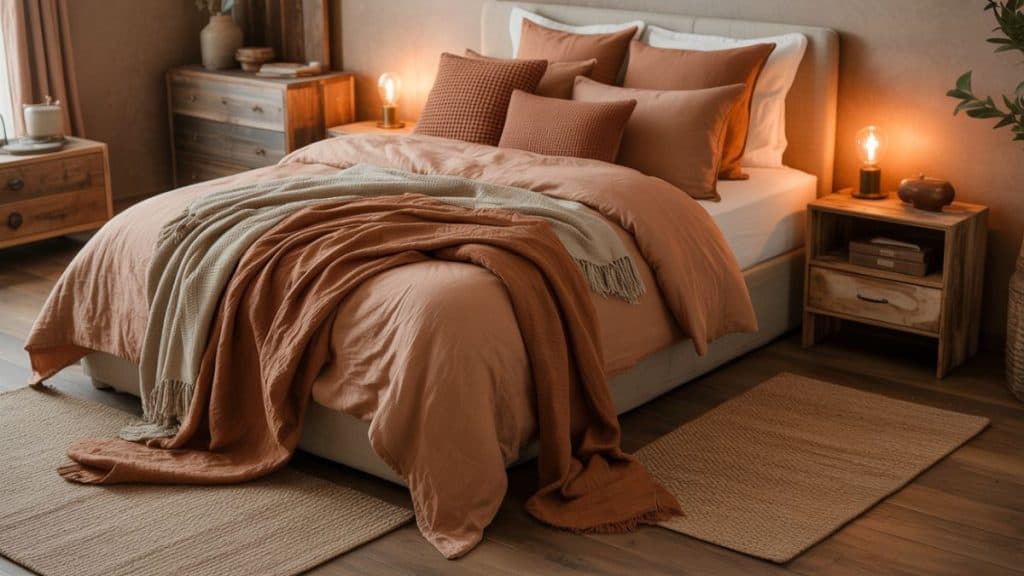
The world is craving comfort, and bedrooms are answering with warm, earthy palettes that feel calm and supportive. These tones create a natural cocoon effect that makes you want to unwind immediately.
Trending shades:
- Warm mushroom
- Dusty cedar
- Clay terracotta
- Soft cocoa brown
- Desert rose
- Deep olive
- Amber neutrals
- Smoky taupe
These colors feel timeless, photograph beautifully, and pair perfectly with natural textures like wood, stone, linen, and jute.
How to try it: Start with your bedding or a feature wall. Add complementary décor pieces like throw cushions, natural wood trays, or ceramic vases to build a layered, cocooned look.
Wall-to-Ceiling Color Wrap (Color Drenching)
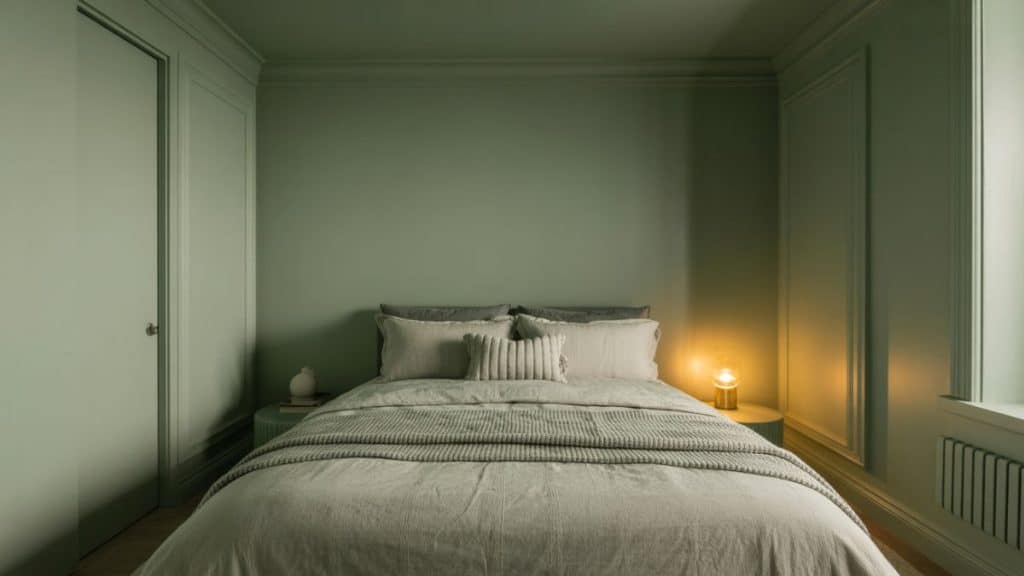
Color drenching is a game-changer. Instead of painting just one accent wall, you extend your color onto the trim, doors, baseboards, and ceiling.
Why it works:
- Eliminates visual interruptions
- Makes small rooms appear larger and taller
- Creates a custom-designed look
- Pairs beautifully with textured minimalism
- Makes lighting effects even softer and more atmospheric
This technique creates a seamless, enveloping space that feels professionally designed.
Pro tip: Choose a warm or muted tone rich but not too dark. Deep sage, clay pink, mocha brown, and stormy blue all work beautifully.
Sensory Layering: Design That Feels as Good as It Looks
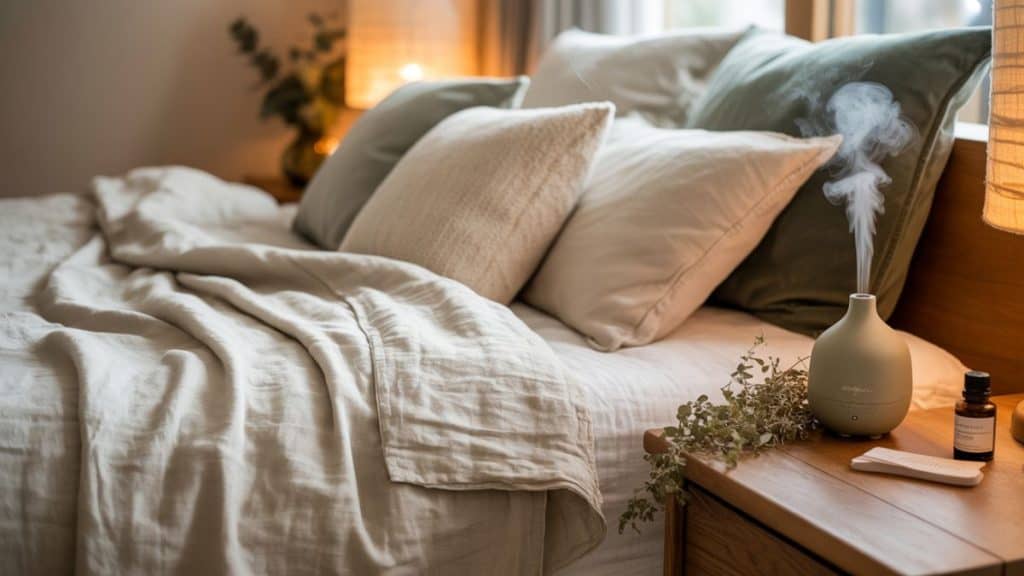
A bedroom should comfort your senses, not just your eyes. Sensory layering intentionally brings in touch, scent, sound, and temperature.
Try adding:
- Touch: Velvet cushions, boucle blankets, raw wood décor, linen sheets
- Scent: Layer a grounding diffuser with a light linen spray to create dimension
- Sound: Minimalist bedside speaker with soft ambient playlists
- Temperature: Cooling mattress toppers or weighted blankets
- Lighting: Warm-toned lamps and soft, indirect glow
This trend is about creating a room where your nervous system immediately relaxes.
Smart Lighting That Creates the Mood for You
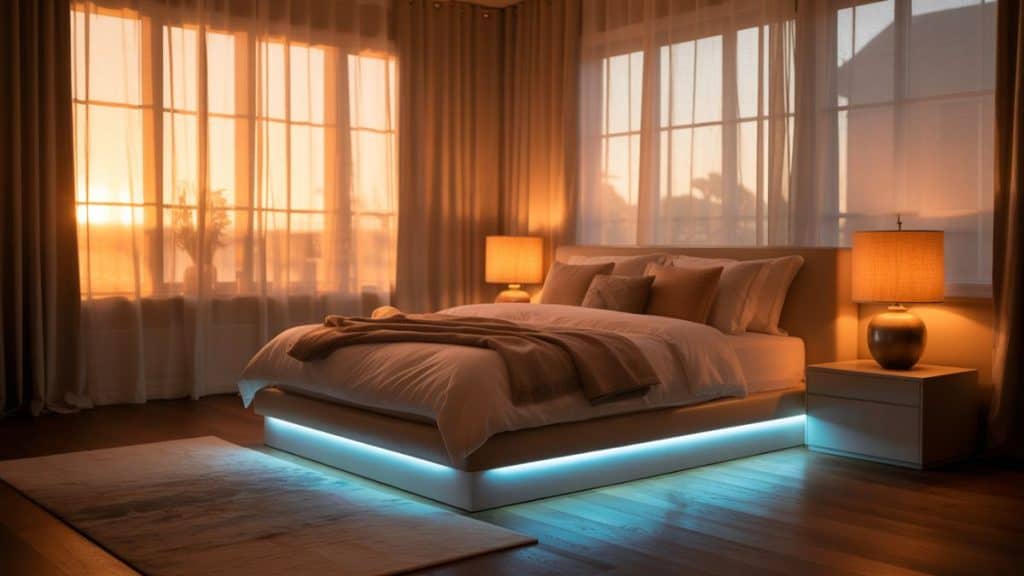
Lighting is becoming the most influential design element in bedrooms this year. Smart lighting allows you to shape the mood with the tap of a button or automatically.
Trendy lighting ideas:
- LED under-bed glow (hotel-style subtle luxury)
- Motion-sensing lights that guide you at night
- “Golden hour” presets that make the room glow warmly
- Dim-to-warm bedside lamps for nighttime reading
- Smart bulbs synced to your daily routine
- Accent lighting behind headboards or shelves
Because lighting transforms everything, it’s one of the easiest upgrades with the biggest impact.
Natural Wood Furniture Makes a Full Comeback
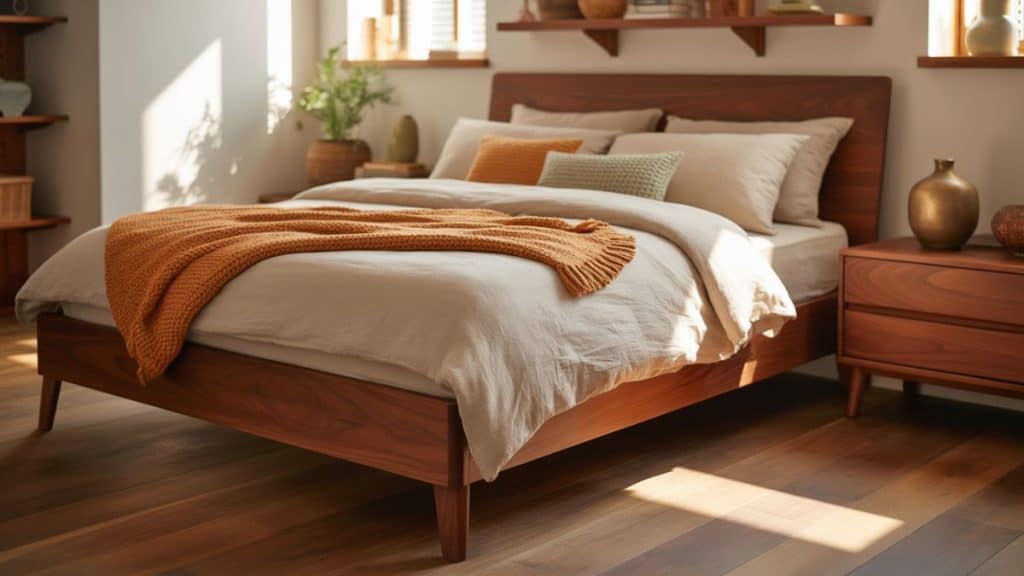
Bedrooms are shifting away from sterile white and grey furniture. Medium-tone woods walnut, oak, acacia, ash bring warmth and nostalgia without feeling dated.
Natural wood adds:
- earthy grounding
- warmth and comfort
- timeless elegance
- contrast against textured walls
- a natural counterbalance to smart tech
Try mixing wood tones gently to create a collected, layered look.
Curated, Collected Decor (Not Showroom Perfect)
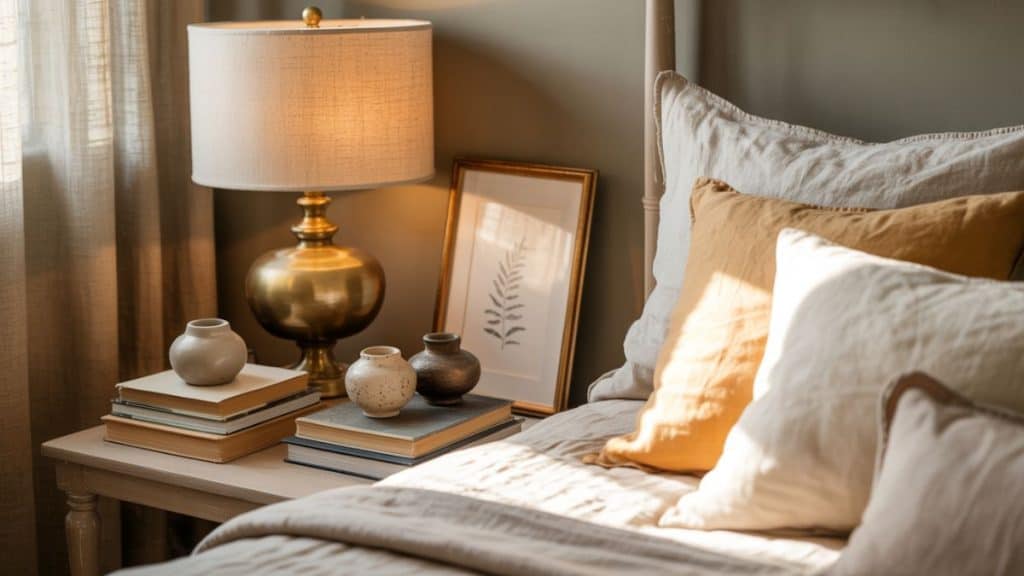
Gone are the days of perfectly matched bedroom sets. This year embraces decor with soul pieces that feel personal rather than purchased in a single shopping trip.
This trend includes:
- thrifted artwork
- vintage bedside lamps
- ceramics picked up on travels
- a stack of books that actually mean something
- heirloom pieces mixed with modern touches
A curated bedroom looks warm, stylish, and unique never cookie-cutter.
Architectural & DIY Headboards
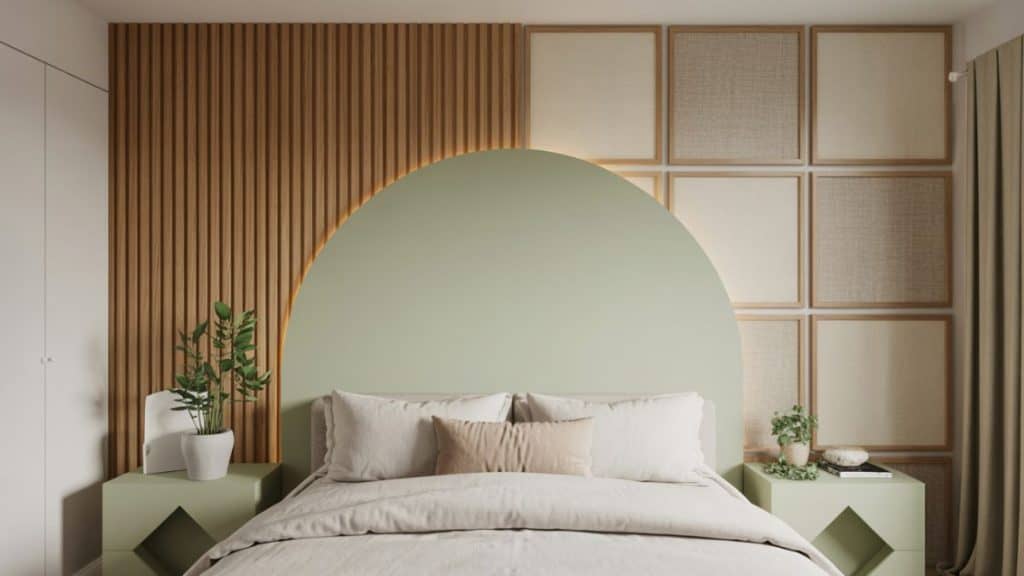
Headboards are no longer just furniture they’re design features. Full-wall headboards are trending because they’re striking, affordable, and customizable.
Ideas you can DIY:
- painted arch behind the bed
- wood panel headboard extending to the ceiling
- linen-wrapped foam panels arranged in a grid
- scalloped wooden trim
- rattan-framed headboard wall
- slatted vertical panels with accent lighting
This trend makes your bed wall instantly Pinterest-worthy.
Hidden Tech, Visible Calm
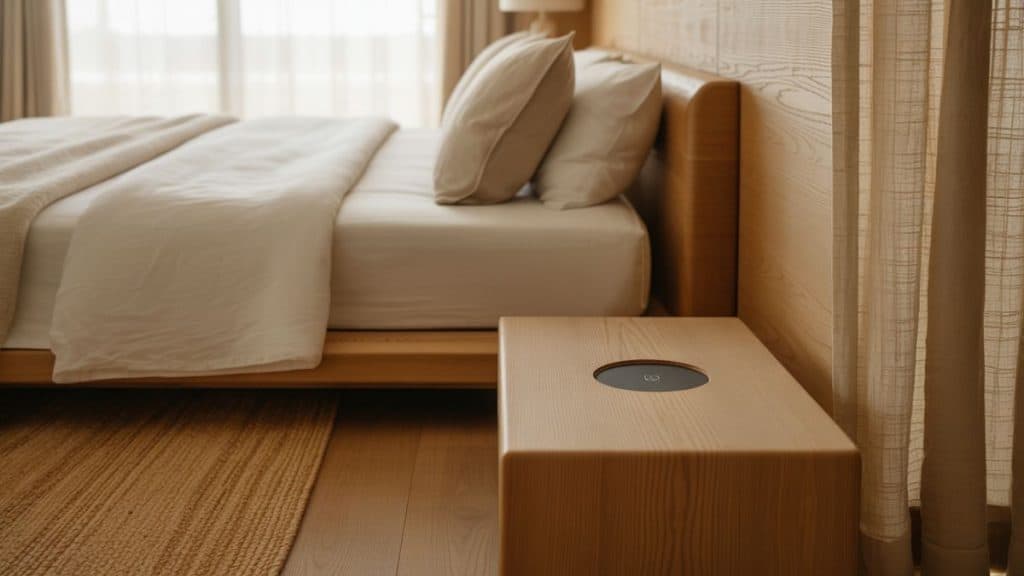
Technology is still essential but visually, people want quiet bedrooms that embraces tech that blends into the background so the room stays peaceful.
Try these upgrades:
- magnetic wireless chargers
- cord channels painted the same color as the wall
- outlet covers that match your room palette
- hidden power strips under nightstands
- motion sensors replacing physical switches
- slim mini projectors instead of bulky TVs
The goal is simple: all the convenience, none of the clutter.
High-Tech Thrift Flips & Sustainable Styling
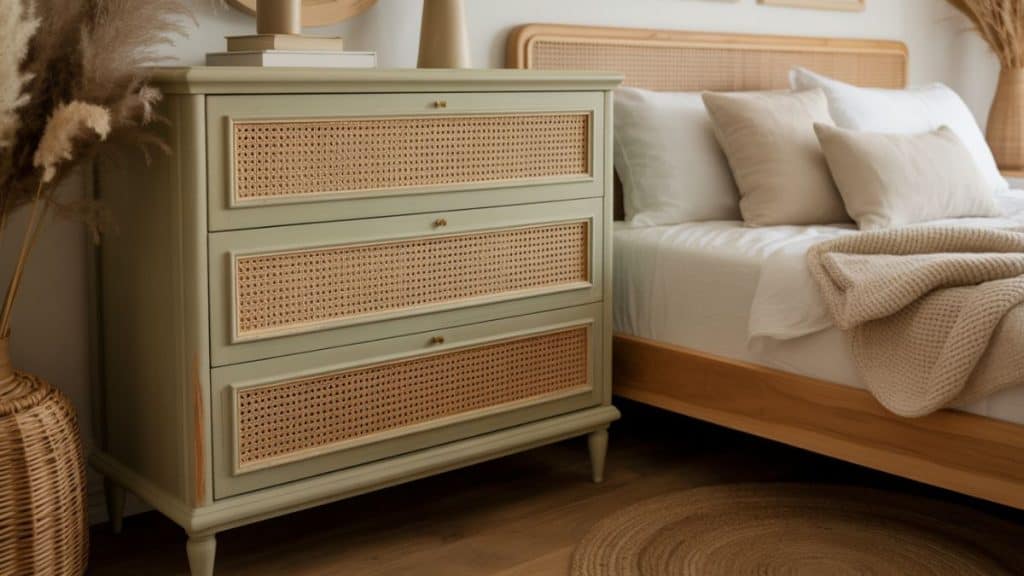
With thrifting more popular than ever, takes it up a notch by adding design tools and easy upgrades to transform old furniture into modern masterpieces.
Popular refinishing ideas include:
- adding cane webbing to drawer faces
- repainting with matte mineral paint for depth
- attaching wood trim for architectural detail
- wrapping panels in linen or muslin
- updating hardware to modern matte metals
This trend lets you create a designer bedroom on a realistic budget.
Biophilic Micro-Moments
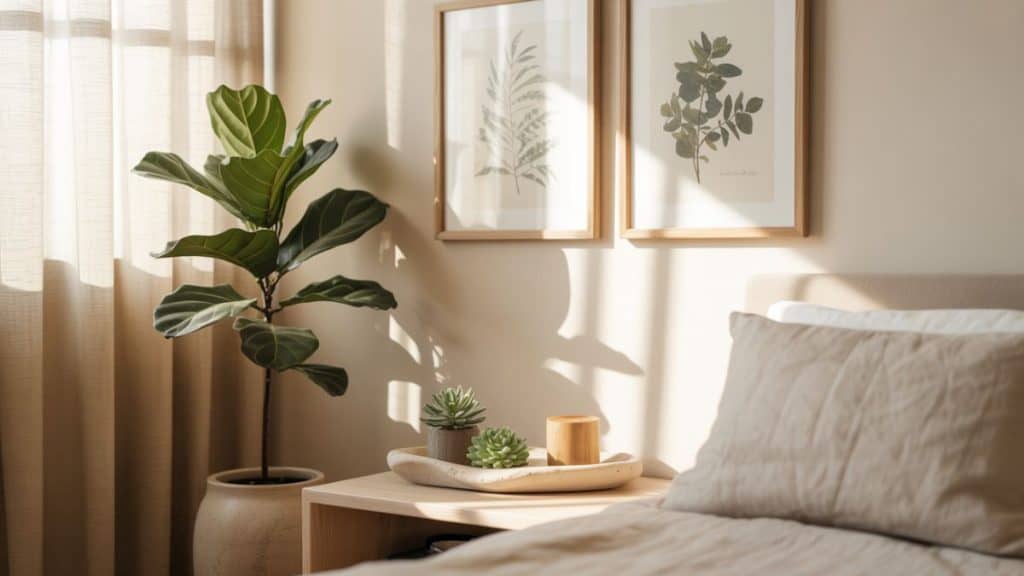
Biophilic design is no longer about filling a room with plants. It’s about thoughtful, small moments of nature that soften the space.
Try these simple touches:
- one dramatic plant (olive tree, monstera, or palm)
- a botanical print in a wood frame
- stones or wooden trays on the nightstand
- a jute or sisal rug for warmth
- daylight-mimicking lamps for darker spaces
It’s subtle, grounding, and eternally stylish.
Performance Bedding & Luxe Layers
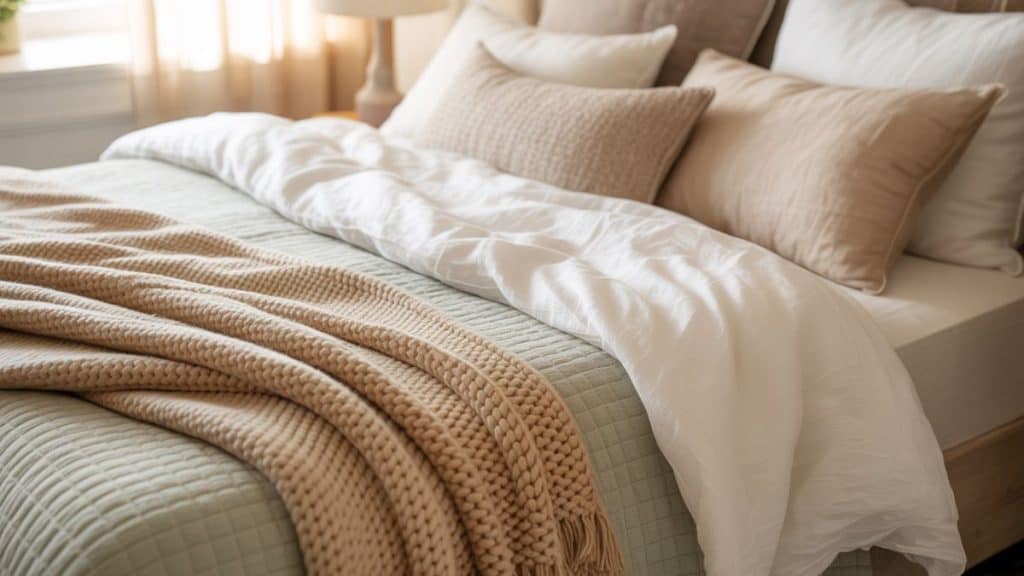
Comfort is trending, and bedding is where it shows. People are investing in breathable fabrics, layered textures, and high-performance materials that support better sleep.
Try layering:
- crisp cotton or linen sheets
- waffle blankets
- quilted coverlets
- textured throw pillows
- a soft, oversized duvet
Neutral palettes keep everything serene and easy to mix.
Quiet Luxury: The Most Influential Trend of the Year
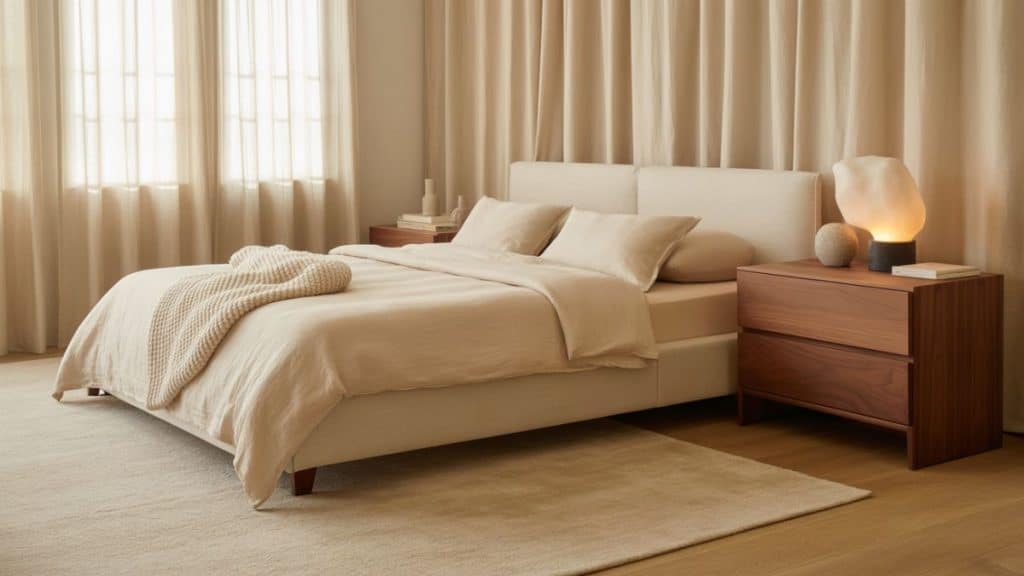
Quiet luxury is the design philosophy shaping the entire year. It’s not about brand names it’s about peaceful, intentional, cohesive styling.
Hallmarks include:
- warm neutral palettes
- natural materials
- decluttered surfaces
- furniture with beautiful silhouettes
- soft lighting
- texture-rich fabrics
A room doesn’t need expensive décor to feel luxurious it just needs harmony.